Tbilisi Metro Map 2026: Lines, Tickets & Prices
Last updated: August 20, 2026

Last updated: August 20, 2026
Tbilisi Metro service updates
Varketili resumed the standard 6:00 AM to 12:00 AM service window on March 16, 2026. Work on the upper vestibule remained planned, so check TTC service updates before traveling through the station.
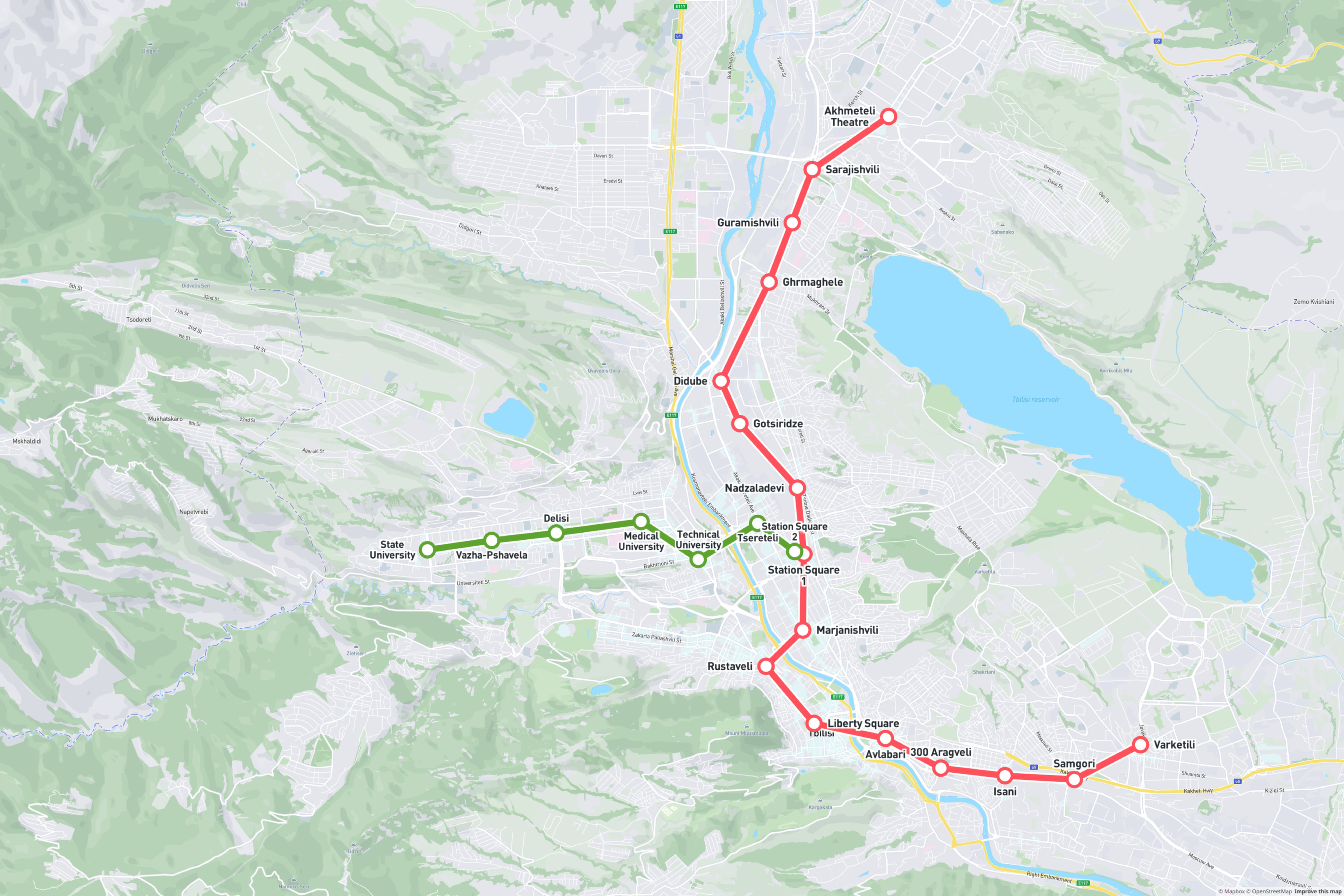
The Tbilisi Metro map shows a compact two-line network that covers central districts, major railway connections and several useful approaches to Old Tbilisi. Save the map for offline orientation, then use this guide to choose lines, fares and onward transport.
The search phrase Tbilisi subway map refers to the same network; the official local English term is Metro. Central attractions often require a walk or a separate cable-car or funicular connection after the rail journey.
Contents
Opened to passengers on January 11, 1966, Tbilisi became the first city in the Caucasus with a metro. The original network had six stations; today’s system is operated by Tbilisi Transport Company, LLC, commonly shortened to TTC.
The current network has two lines and 27.3 km of route. Official infrastructure records count 23 line-specific station facilities, while passengers encounter 22 distinct station names because Station Square 1 and Station Square 2 form one interchange under a shared public name.
The 22-versus-23 Tbilisi station-count difference explains why Tbilisi Metro stations are often reported as either 22 or 23. Use 22 station names for trip planning and regard the two Station Square facilities as the red-line and green-line sides of the same transfer complex.
The depth of the Tbilisi Metro matters in practice. A 2022 infrastructure study classified 20 of 22 station locations as underground, including 16 deep stations. However, this classification does not mean the network is step-free.
Rustaveli has the longest escalator in the TTC network, measuring 118 m with a ride of about 132 seconds. Travelers with heavy luggage or limited mobility should allow extra transfer time and assess the stations needed for their specific route.
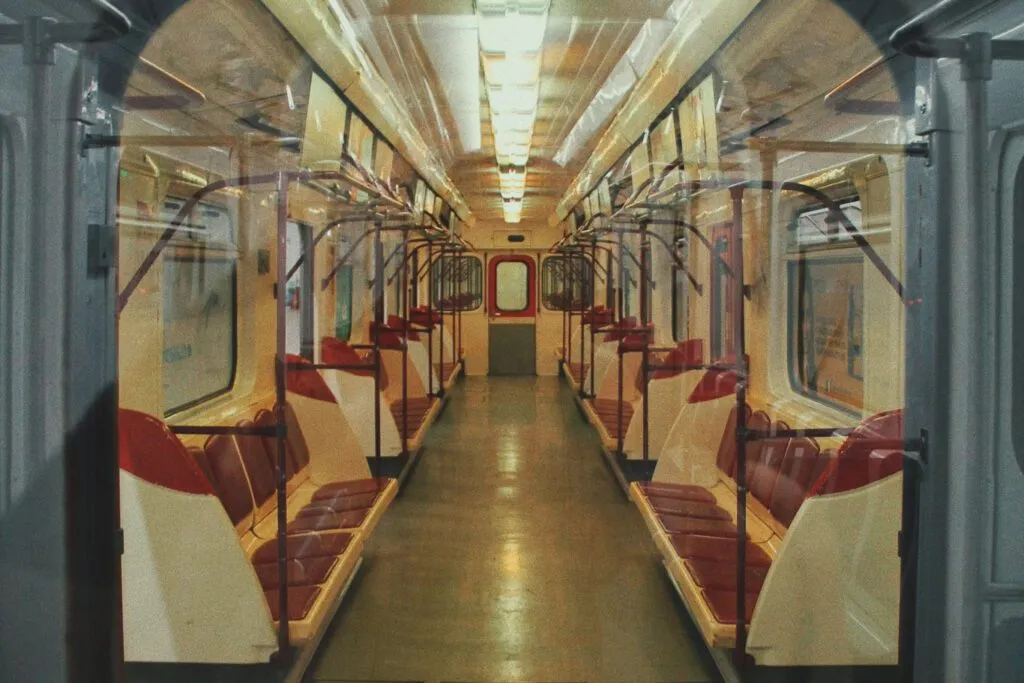
Gotsiridze provides a useful station-specific example: its 2023 reopening included two elevators and tactile paths. Access conditions differ by station, so travelers with limited mobility should plan around the exact entrances and platforms needed for their route.
Varketili reopened for the standard operating window on March 16, 2026, although work on its upper vestibule remained planned. Buses, minibuses, cable cars and the Mtatsminda Funicular are separate systems and are never included in the two Metro lines.
On the red line, the sequence includes Akhmeteli Theatre, Sarajishvili, Guramishvili, Ghrmaghele, Didube, Gotsiridze, Nadzaladevi, Station Square 1, Marjanishvili, Rustaveli, Liberty Square (Tavisuplebis Moedani), Avlabari, 300 Aragveli, Isani, Samgori and Varketili.
The green line serves Station Square 2, Tsereteli, Technical University, Medical University, Delisi, Vazha-Pshavela and State University.
The Tbilisi Metro is relatively easy to understand because two color-coded lines share one interchange. A journey may still involve a substantial walk, a steep uphill section, or a separate cable-car or funicular ride after leaving the station.
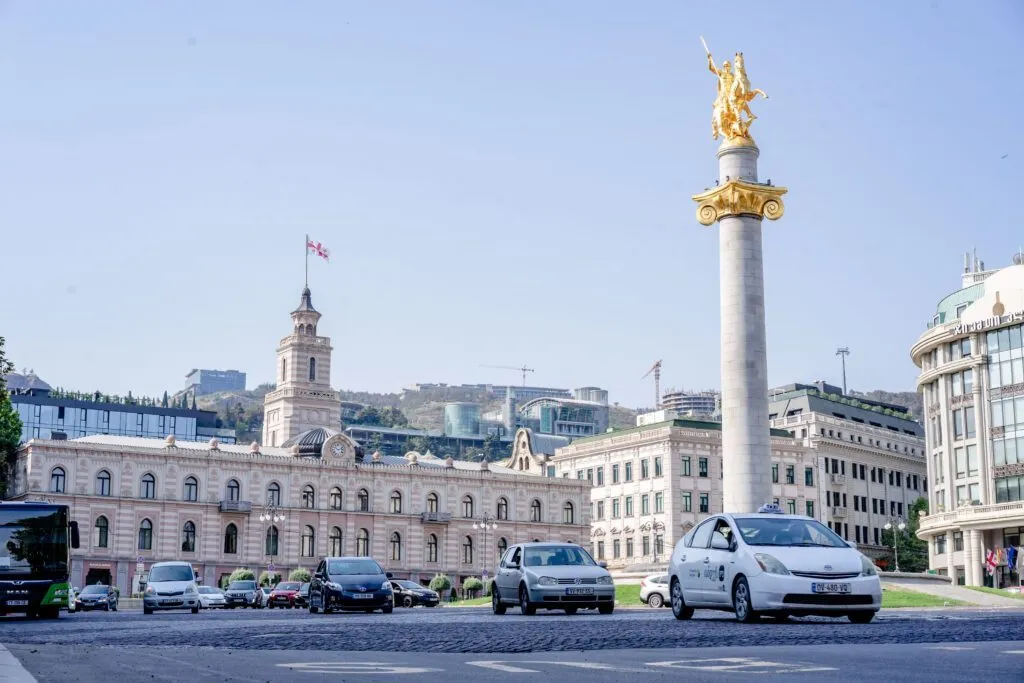
For Old Tbilisi, Avlabari is often the practical approach, but it is not beside the bath district. Rustaveli and Liberty Square serve different sections of the long Rustaveli Avenue, so choose the station closest to your destination.
The destination table lists walking times and onward transport options. Cable cars and the Mtatsminda Funicular are separate from the rail network, even when a Metro station is the most convenient starting point.
| Attraction or destination | Line | Station | Practical note |
|---|---|---|---|
| Old Tbilisi and Abanotubani | Akhmeteli-Varketili Line | Avlabari | Walk about 15-20 minutes toward Metekhi Bridge and the bath district; expect slopes and cobbles. |
| Rustaveli Avenue, Opera House and National Museum | Akhmeteli-Varketili Line | Rustaveli for the Opera; Liberty Square for the National Museum | Allow about 9-10 minutes from Rustaveli to the Opera and 4-5 minutes from Liberty Square to the museum. |
| Holy Trinity (Sameba) Cathedral | Akhmeteli-Varketili Line | Avlabari | Walk about 10-15 minutes uphill; the cathedral is not station-adjacent. |
| Dry Bridge Flea Market | Akhmeteli-Varketili Line | Liberty Square | Walk about 13-15 minutes; the market is central but not directly at a Metro station. |
| Rike Park and Narikala Fortress | Akhmeteli-Varketili Line | Avlabari | Walk downhill about 8-10 minutes to Rike Park, then use the separately ticketed cable car to Narikala. |
| Mtatsminda Park | Akhmeteli-Varketili Line | Liberty Square | Walk about 15-20 minutes uphill to the separate funicular at 22 Daniel Chonkadze Street. |
| Tbilisi Central railway station | Both lines | Station Square | Allow about 5-10 minutes within or around the complex; Station Square 1 and 2 are the line-specific platforms. |
Tbilisi uses a time-based urban transport tariff. The standard 90-minute fare is 1 GEL (USD 0.38) and covers the Metro, municipal buses, minibuses and the Bagebi-University ropeway when an eligible card is used.
Two separate 2 GEL (USD 0.76) cards serve different needs. Metromoney carries ordinary fares, while the Subscription card is required for unlimited one-day, weekly and longer time passes.
Tbilisi offers short visitor passes and longer subscriptions.

| Ticket | Price | Buy ticket |
|---|---|---|
| 90-minute fare | 1 GEL (USD 0.38) | Load Metromoney at a Metro payment office or pay with a supported contactless bank card or NFC wallet. |
| Metromoney card | 2 GEL (USD 0.76) | Metro or Rike-Narikala payment office. |
| Subscription card | 2 GEL (USD 0.76) | Metro payment office or a designated Bank of Georgia service point. |
| 1-day pass | 3 GEL (USD 1.15) | Load onto a Subscription card. |
| 1-week pass | 20 GEL (USD 7.64) | Load onto a Subscription card. |
| 1-month pass | 40 GEL (USD 15.28) | Load onto a Subscription card. |
| 3-month pass | 100 GEL (USD 38.21) | Load onto a Subscription card. |
| 6-month pass | 150 GEL (USD 57.32) | Load onto a Subscription card. |
| 1-year pass | 250 GEL (USD 95.53) | Load onto a Subscription card. |
Prices as of August 2026; source: Tbilisi Transport Company.
Metromoney is sold at Metro payment offices and at the Rike-Narikala payment offices. The non-personalized card requires no identity document, and it can be topped up at those offices plus Bank of Georgia express machines and service centers.
Keep the original receipt: within one month, TTC refunds the 2 GEL (USD 0.76) Metromoney cost when the card and receipt are returned.
At Metro gates, travelers can tap Metromoney, Visa, Mastercard or American Express, or a linked NFC phone or wearable. Acceptance depends on the issuer, card status and technical processing.
The 90-minute package covers Metro, eligible buses, minibuses and the Bagebi-University ropeway. Rike-Narikala instead costs 2.5 GEL (USD 0.96) one way.
Standard service runs from 6:00 AM to 12:00 AM. These are network-wide operating hours, not the exact first or last departure times for every platform.
TTC timetables for August 15-21, 2026 show mostly 3-4-minute weekday gaps during busier mornings and daytime, with weekend daytime gaps generally 4-5 minutes.
Scheduled gaps widen to roughly 4-7 minutes after 8:00 PM and are mostly 8-11 minutes after 10:00 PM, depending on line and direction.
The Tbilisi Metro is not a 24-hour system. Service to 2:00 AM appears only in selected event announcements; check the official trip planner and current TTC notices for the travel date.
Tbilisi International Airport (TBS) has no direct Metro station. Bus 337 connects the airport with Station Square, while airport taxis, Bolt and Yandex Go offer direct car journeys.
Bus 337 stops in front of Arrivals and runs to Station Square 1, where travelers can enter the red line or transfer through the complex to the green line.
The bus fare is 1 GEL (USD 0.38).
For August 15-21, 2026, TTC schedules airport departures from 6:57 AM to 10:54 PM on weekdays and 6:55 AM to 10:57 PM on weekends. The scheduled end-to-end trip takes about 69-70 minutes; traffic can make it longer.
The official airport taxi rank is at the Arrivals curb and operates 24 hours. The airport gives a metered range of 40-60 GEL (USD 15.28-22.93) and a normal journey time of 20-30 minutes depending on traffic.
Bolt documents an airport category with an average fare of 30 GEL (USD 11.46), not a fixed price. Yandex Go also operates locally and displays its price and estimated travel time before booking; check the live quote in either service.
A January 2026 market-research process covered possible extensions at both ends of the Akhmeteli-Varketili Line.
The proposed Line 1 extensions total 5.2 km, with 2.2 km toward Gldani and 3 km toward Varketili. The brief calls for four stations to be designed and two to be built after pre-design location studies, without a fixed public opening year.
A separate 2025 market-research process examined the central part of a possible third line. Its indicative scope is 8.5 km and seven stations, running between proposed Didube 2 and Rustaveli 2 facilities.
The two Tbilisi Metro expansion studies remain at the planning and market-research stage, with no funding, construction start or opening date announced.
Fun Fact: In its opening year, Tbilisi Metro carried 21.5 million passengers on a network that initially had just six stations.
For visitors in 2026, the Tbilisi Metro is a compact two-line network with a 1 GEL (USD 0.38) fare and no direct airport station.
The Tbilisi Metro is relatively easy to navigate because it has two color-coded lines and one shared interchange at Station Square. Several visitor destinations still involve a long walk, an uphill section, or a separate onward ride after leaving the station.
In Tbilisi, a standard 90-minute Metro fare costs 1 GEL (USD 0.38). Unlimited passes range from 3 GEL (USD 1.15) for one day to 250 GEL (USD 95.53) for one year and require a Subscription card.
Tbilisi has two Metro lines: the red Akhmeteli-Varketili Line and the green Saburtalo Line. They connect at Station Square through Station Square 1 and Station Square 2.
Tbilisi’s Metro network has 23 line-specific station facilities but 22 distinct passenger-facing station names. Station Square 1 and Station Square 2 create the difference in the two counting methods.
No. Metro service in Tbilisi normally runs from 6:00 AM to 12:00 AM. Later service may be announced for individual events, but it is not a permanent overnight schedule.
Metro riders in Tbilisi can pay the 1 GEL (USD 0.38) fare with Metromoney or a supported contactless bank card or NFC wallet. Visa, Mastercard and American Express are among the documented card options.
In Tbilisi, Metromoney is sold at Metro and Rike-Narikala payment offices. It can be topped up there and at Bank of Georgia express machines and service centers.
Standard Metro service in Tbilisi ends at 12:00 AM. Treat that as the network window, not an exact last-departure time for every station, and check the official trip planner for a late journey.
No. Tbilisi International Airport has no direct Metro station. Bus 337 connects Arrivals with Station Square, while airport taxis and local ride-hailing services provide direct car travel.
From Tbilisi International Airport, take bus 337 to Station Square 1 for 1 GEL (USD 0.38); the scheduled trip takes about 69-70 minutes before the Metro transfer. Traffic can add time. Taxis, Bolt and Yandex Go provide direct alternatives.
You might also be interested in these metro maps – for comparison or for your next trip: