Barcelona Metro Map 2026 – Timetable, Tickets & Prices
Last updated: September 29, 2026

Last updated: September 29, 2026
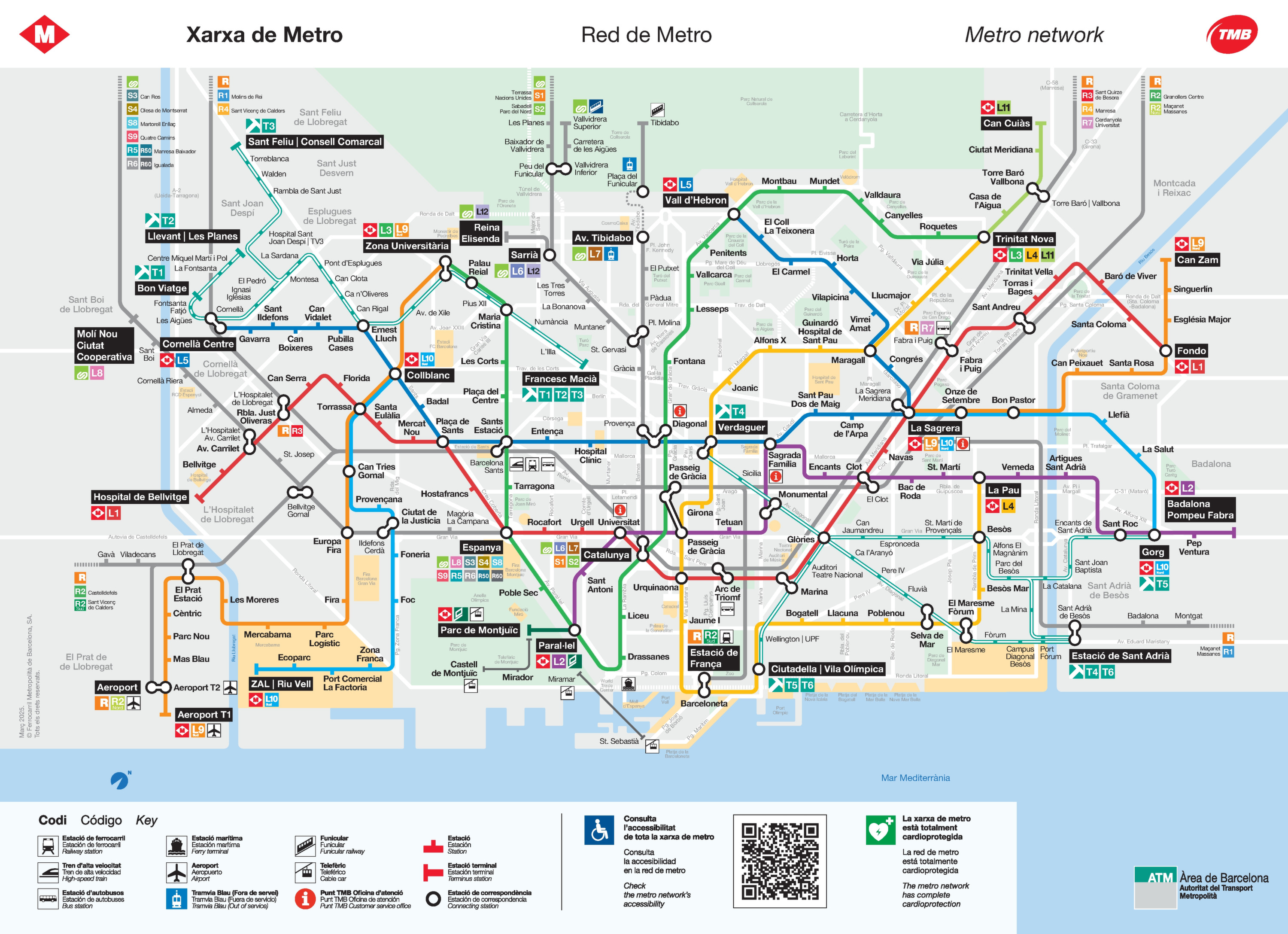
The metro in Barcelona is the second oldest metro system in the country after the metro in the Spanish capital Madrid. It was opened in 1924 with just a single line. At the end of 2025, the TMB-operated metro network in Barcelona alone, including the Funicular de Montjuïc, extended over a total length of 125.4 kilometers. The 12 metro lines operated by TMB and FGC serve Barcelona and the surrounding area; the TMB network, including the Funicular de Montjuïc, had 165 stations at the end of 2025. The TMB metro network alone recorded a total of 479.9 million journeys in 2025.
Similar to Istanbul, the metro system is operated by two transport companies. While lines L1 to L5 and L9 to L11 are operated by “Transports Metropolitans de Barcelona” (TMB), lines L6 to L8 and L12 belong to the Catalan railroad company “Ferrocarrils de la Generalitat de Catalunya” (FGC). A typical feature of Barcelona’s metro is that many lines run through tunnels. Outside the city center, some sections also run above ground. In Barcelona, the Metro Map includes the six streetcar lines T1 to T6 in addition to the metro lines preceded by an “L”. These can be clearly recognized by the capital letter “T”.
Contents
Barcelona has developed into a real magnet for tourists in recent decades. This tourism boom is reflected in the more than fivefold increase in hotel guest numbers from 1990 to 2016, from 1.7 million to 9.1 million guests per year. The Metro Map can help visitors find their way around Barcelona.
In the Catalan capital, sights such as the Sagrada Família basilica, Park Güell and the Las Ramblas promenade can be reached by metro followed by a walk. However, guests in particular often ask themselves where they can buy metro tickets in Barcelona, how much they cost and which ticket will save them money.
Barcelona uses an integrated fare system with fare zones; the city lies in zone 1. This means that journeys within zone 1 using an integrated ticket are charged at the fare for that zone. For integrated tickets, this applies regardless of which company operates the subway line.
However, special ticket conditions apply at the Aeroport T1 and Aeroport T2 airport stations on L9 Sud. In addition, an integrated ticket also entitles the holder to use the streetcar, the city bus lines and the FGC regional train in fare zone 1. This covers the entire city of Barcelona and, among other municipalities, El Prat de Llobregat, where the airport is located.
The classic single ticket for Barcelona’s metro is valid for one journey until you leave the metro, up to a maximum of 120 minutes after the first validation. The transport companies also offer ten-trip tickets and season tickets such as day passes and monthly passes. Those staying longer in Barcelona, on the other hand, can take advantage of more attractive offers. With the Hola Barcelona Travel Card as well as the Barcelona Card, you can marvel at the countless cultural sights non-stop. Both tickets are available in several variants. Versions that include public transport allow unlimited journeys on the metro and the other included services throughout the city during their period of validity. The Barcelona Card also offers benefits such as free admission to over 25 museums and cultural venues and substantial discounts on other activities. The “Barcelona Metro Map” also helps with planning your trip. This makes orientation much easier.
| Ticket | Prices | Buy tickets |
|---|---|---|
| Single ride | €2.90 | available on-site |
| Airport ticket (one way) | €5.90 | available on-site |
| "Hola Barcelona Travel Card" (48h) | €18.70 + €1.00 for a new card | available on-site and online |
| "Hola Barcelona Travel Card" (72h) | €27.30 + €1.00 for a new card | available on-site and online |
| "Hola Barcelona Travel Card" (96h) | €35.60 + €1.00 for a new card | available on-site and online |
| "Hola Barcelona Travel Card" (120h) | €43.60 + €1.00 for a new card | available on-site and online |
Single, day and season tickets can be purchased at the ticket machines. They are located in the entrance halls of Barcelona’s subway stations. Tickets are finally validated at the entrance to the platforms. The ticket validators only allow access after a ticket has been successfully validated.
To validate a T-mobilitat card, simply hold it against the contactless symbol on the reader. A T-casual ten-trip ticket cannot be validated for several people at the same time. This means it can only be used by one person per journey.
From Mondays to Thursdays and on weekday public holidays, the TMB metro in Barcelona generally runs between 5:00 and 24:00; on Sundays, the continuous weekend service ends at 24:00. The waiting time between trains depends on the line and the time of day. Night owls also benefit from Barcelona’s metro generally running until 2:00 a.m. on Fridays and on the eve of public holidays.
Exceptions are Saturdays and the nights leading into January 1, June 24 and September 24, when the TMB metro operates 24 hours a day. After the metro closes, night owls can take a cab or use the network of 24 night bus routes. Operating times vary by route, and the night buses also serve areas outside Barcelona.
Not only are some of the buildings designed by Antoni Gaudí curious, but also the announcements on the Barcelona Metro. The announcement “Pròxima estació”, meaning “next station”, was recorded by Carles Davó. Loudspeaker announcements also provide passengers with service information and updates on possible disruptions.
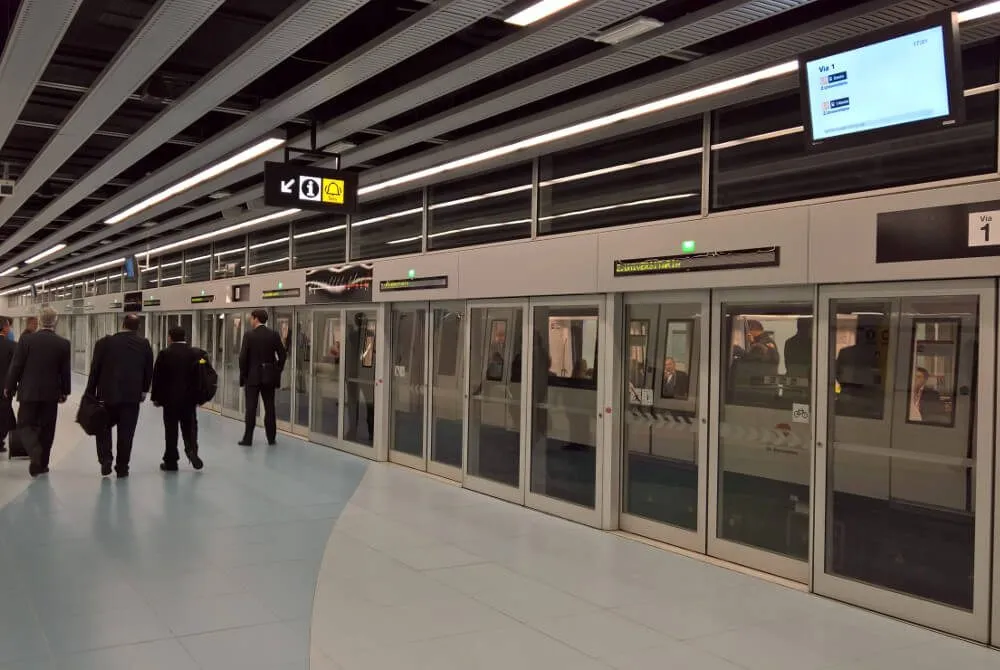
Lines L9 and L10 are currently being extended to improve connections; an extension of L3 is planned. Distinctive features of L9 and L10 include fully automatic operation and the use of double-deck tunnels with two track levels along some sections.
The TMB metro normally runs from 5:00 to 24:00 Monday to Thursday, and until 2:00 a.m. on Fridays and the eve of public holidays. It runs continuously from 5:00 on Saturday until 24:00 on Sunday. The closing times refer to the last departure from each end of a line. Different timetables apply on public holidays, at certain stations and on FGC lines; on December 24, TMB services end at 23:00.
L9 Sud connects Aeroport T1 and Aeroport T2 with Barcelona. One option is to travel to Zona Universitària and change there to L3 for Catalunya in the city center. The journey from T1 to Zona Universitària takes approximately 32 minutes; allow extra time for the transfer and onward journey. To use the airport stations, you need a valid airport ticket or a pass that covers them, such as the Hola Barcelona Travel Card; standard single tickets and T-casual tickets are not valid there.
Use the PDF Download button below the metro map to open the PDF file in a new tab. You can then download the map using your browser’s save function.
You can buy tickets at the machines in metro stations and pay in cash or by bank card. A T-mobilitat card stores your chosen ticket; validate the card by holding it against the contactless reader at the entrance. At some metro entrances equipped for this, you can also buy and validate a single ticket directly with a contactless bank card.
The T-dia for zone 1 costs €12.00 and is valid for one person for 24 hours from the first validation. It also includes one metro journey to the airport and one journey back; a new cardboard T-mobilitat card costs an additional €1.00. For longer stays, the Hola Barcelona Travel Card is available with 48, 72, 96 or 120 hours of validity.
The official TMB App from Transports Metropolitans de Barcelona offers route planning, metro and bus information, and service disruption updates. It is available for Android on Google Play and for iPhone in the Apple App Store.
You might also be interested in these metro maps – for comparison or for your next trip: