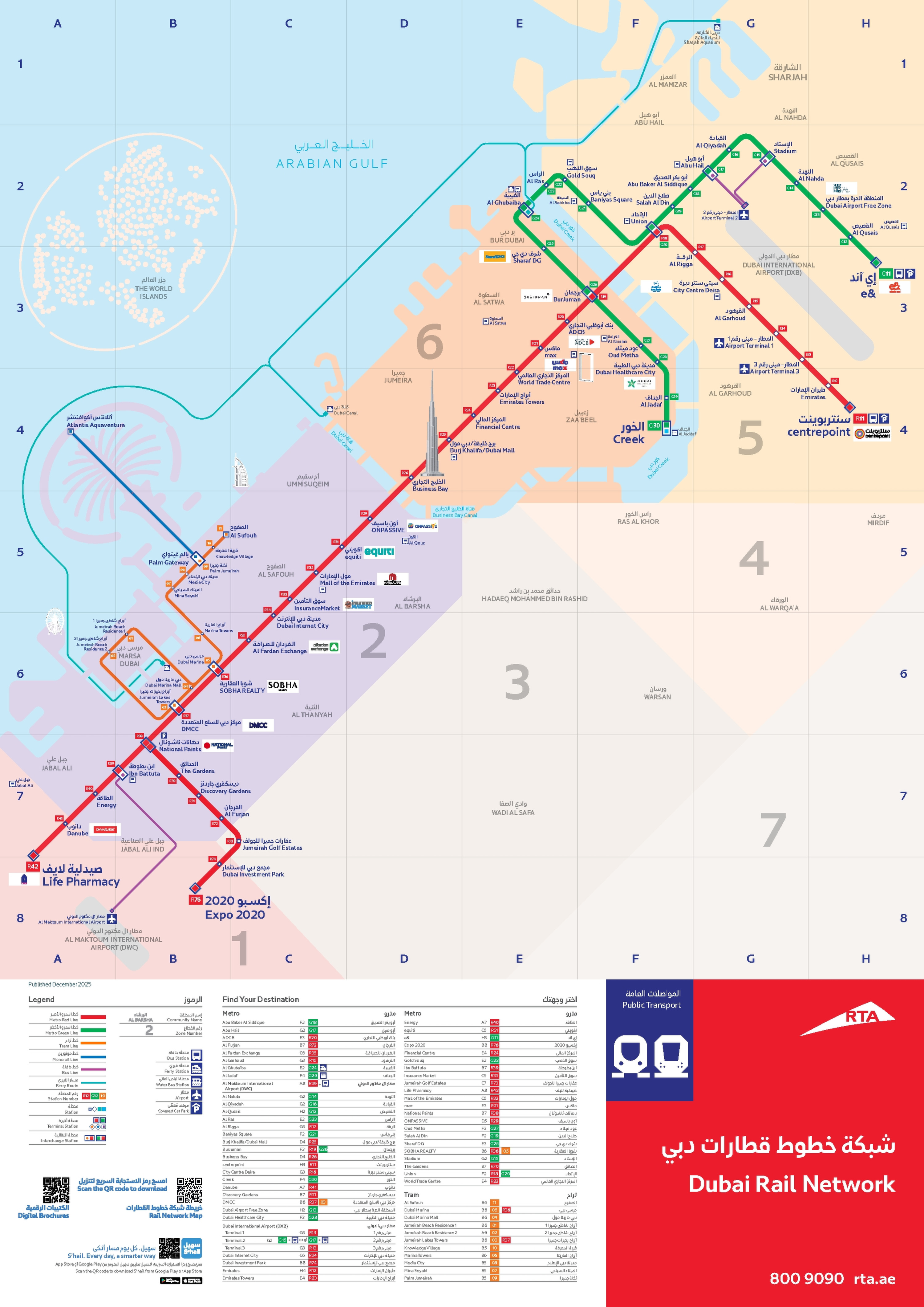
Dubai Metro Map 2026: Lines, Tickets & Prices
Last updated: July 15, 2026

Last updated: July 15, 2026
Current Service Updates
Note (as of July 2026): No continuous service-status feed is published. For current alerts and construction updates, such as those for the Blue Line (construction started April 2026), check the operator RTA. Individual stations may close briefly in extreme weather, as happened during the severe storms of April 2024.
All current updates: RTA.
The Dubai Metro map shows one of the longest driverless metro networks in the world: two lines, 53 stations and around 90 kilometers of track (as of July 2026). Above you can view the official RTA network map as a zoomable PDF to download, also known as the Dubai Metro plan or Dubai metro station map. This guide explains every line, the Nol Card tickets and their prices, the timetable and the connection to DXB airport.
The Dubai Metro ranks among the longest driverless metro networks in the world. Its Red Line, at 52.1 kilometers, is still the longest driverless metro line ever built according to Guinness World Records; the earlier record for the longest driverless metro network, however, has been held by the Riyadh Metro since late 2024. The network opened on September 9, 2009.
The owner and regulator is the Roads and Transport Authority (RTA); operation and maintenance have been handled by the Keolis-MHI joint venture since September 2021. Every train runs fully automatically and without a driver, controlled by Thales SelTrac (CBTC) signaling. Our guide to the Copenhagen Metro covers another fully driverless network.
The network spans around 89.6 kilometers and 53 stations, or 55 if you count the two interchange stations Union and BurJuman twice (as of July 2026, including the Route 2020 extension). Older figures of 47 or 49 stations are outdated. In 2025 the RTA counted 294.7 million passengers on the Red and Green Lines, seven percent more than in 2024; the busiest station was BurJuman with 17.8 million passengers.
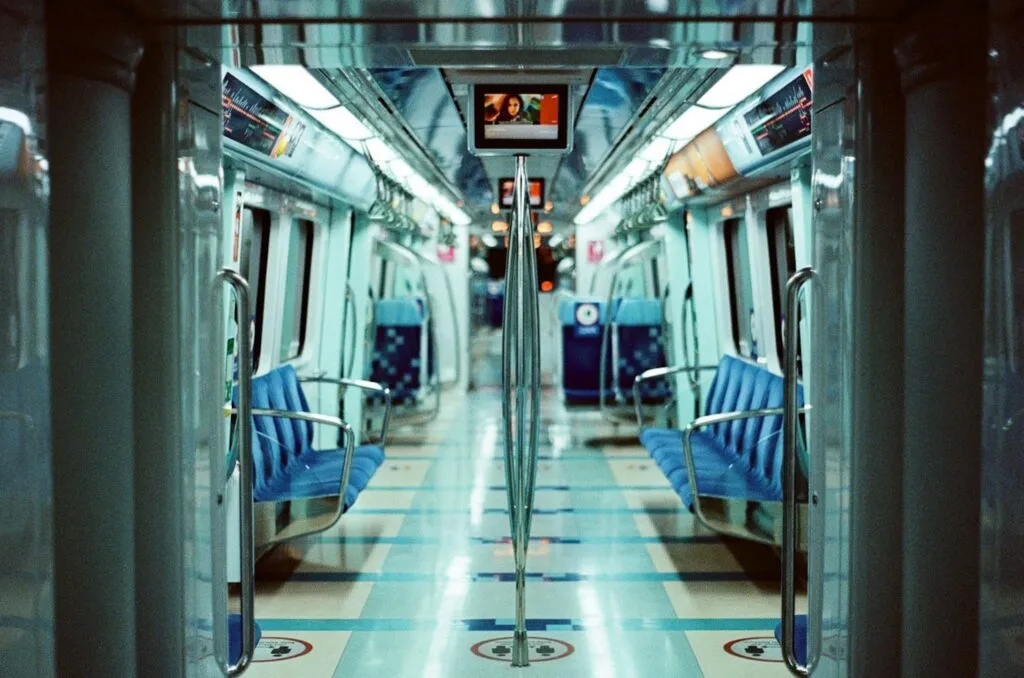
Travelers choose between three classes: the Gold Class with a private cabin, leather seats and panoramic views, a dedicated cabin for women and children, and the regular Silver Class.
The network consists of two lines; Route 2020 is a western branch of the Red Line. Colors and station codes according to the official RTA network map:
The Dubai Metro map uses just a few elements: line name with color, terminus as the direction indicator and marked interchange points. Here is how to navigate the Dubai Metro map in four steps:
Each station carries a letter-and-number code (R for Red, G for Green), which the Dubai metro station map also shows on every platform. The embedded RTA PDF is labeled bilingually, in Arabic and English.
For travelers, the Dubai Metro is the easiest and cheapest way across the city: air-conditioned, punctual and signposted in English. Dubai is one of the most visited destinations in the world, and for many guests the metro is the first form of transport from the airport into the city center.
Strict rules apply on the metro: eating and drinking outside designated areas carries a 100 AED (≈ $27.23) fine (as of July 2026). The first cabin of every train is reserved for women and children; men who use it face a fine. As in other major world cities, such as on the Paris Metro map, it pays to take a quick look at the local rules before your first ride.
Almost every major attraction has its own station: the Burj Khalifa and the Dubai Mall sit at the Burj Khalifa/Dubai Mall station (R25, Red Line), from which an air-conditioned pedestrian bridge leads to the entrance (around 10 to 15 minutes on foot). The Mall of the Emirates is reached via R32, and Expo City via the Route 2020 terminus Expo 2020 (R76). On the Green Line you will find the Gold Souq in Deira (G22) and Al Ghubaiba (G24) near the abra docks on Dubai Creek. Important: despite their names, Dubai Marina and JBR have no metro station of their own; the nearest stops are DMCC (R37) and Sobha Realty (R36), while the separate Dubai Tram runs directly to the beachfront promenade.
From Dubai International Airport (DXB), the Red Line is reachable directly at Terminal 1 (station R14) and Terminal 3 (station R13). Terminal 2 has no metro station of its own; from there you continue by taxi or shuttle bus. The ride to Burj Khalifa/Dubai Mall station takes around 25 to 30 minutes; with a Nol Silver Card the fare ranges, depending on the zones you travel through, from 5 AED (≈ $1.36, two zones) to 7.50 AED (≈ $2.04, more than two zones), as of July 2026. You may bring at most two pieces of luggage including hand baggage; Nol cards are available at the counters and vending machines in Terminals 1 and 3.
You pay with the rechargeable Nol Card. The network is split into seven fare zones; the price depends on the number of zones you travel through. You tap in at the reader when entering and tap out when leaving, and the amount is deducted automatically. A minimum balance of 7.50 AED (≈ $2.04) is required to tap in. Anyone traveling in the Gold Class pays double the fare. Children up to five years old and people with disabilities travel for free.
Cards and credit are available at the ticket vending machines, at station counters, in the RTA Happiness Centres and online. All prices below are shown in AED with a US-dollar conversion; because the dirham has been pegged to the US dollar at 1 USD = 3.6725 AED since 1997, these conversions stay stable over time (as of July 2026). The most important Dubai Metro tickets at a glance:
| Ticket | Price (as of July 2026) | Buy a ticket |
|---|---|---|
| Nol Silver Card | 25 AED (≈ $6.81, incl. 19 AED credit) | via the nol Pay app (Android, iOS) or on site |
| Single ride Silver (1 / 2 / >2 zones) | 3 / 5 / 7.50 AED (≈ $0.82 / $1.36 / $2.04) | Available on site |
| Gold Class (1 / 2 / >2 zones) | 6 / 10 / 15 AED (≈ $1.63 / $2.72 / $4.08) | Available on site |
| Nol Red Ticket (paper, up to 10 rides) | 2 AED (≈ $0.54, plus fare) | Available on site |
| 7-day pass, all zones (Silver / Gold) | 110 / 220 AED (≈ $29.95 / $59.90) | Available on site |
| 30-day pass, all zones (Silver / Gold) | 350 / 700 AED (≈ $95.30 / $190.61) | Available on site |
| Nol Travel Card (for tourists) | 100 AED (≈ $27.23, incl. 19 AED credit) | Available on site |
Prices as of July 2026; source: RTA Nol Fares. USD values converted at the rate 1 AED ≈ $0.27 (as of July 2026). The official nol Pay app comes from the developer “Roads & Transport Authority”.
The Dubai Metro runs Monday to Thursday from 05:00 to 00:00, Friday later from 05:00 to 01:00, Saturday from 05:00 to 00:00 and Sunday only from 08:00 to 00:00 (as of July 2026). The later Sunday start and the extended Friday evening reflect the UAE weekend (Saturday and Sunday), in place since January 2022; older timetables reading “Saturday to Thursday from 07:00” are outdated.
At peak times a train arrives roughly every 2.5 to 4 minutes, and off-peak every 5 to 7 minutes. Current intervals per line are shown in the RTA timetable; the line colors match the Dubai Metro map above.
There is no continuous night service. After the metro closes, RTA night buses such as lines N30 and N55 take over; bus line C01 between airport Terminal 3 and Al Satwa runs around the clock.
The network keeps growing. The Blue Line will be the third line: 30 kilometers, 14 stations, construction started April 2026 and service starting September 2029. Among other areas it will serve Dubai Creek Harbour, International City and Dubai Silicon Oasis, connect DXB airport directly and meet the existing network at three stations: Creek/Al Khor (Green Line), Centrepoint (Red Line) and International City.
On April 22, 2026 the government also approved the Gold Line: 42 kilometers, 18 fully underground stations, a budget of 34 billion AED (≈ $9.26 billion) and, once again on a September 9, an opening in 2032. It is set to link Al Ghubaiba with Jumeirah Golf Estates and expand the metro network from 120 to 162 kilometers (plus 35 percent). Our guides cover more metro networks, for example the Istanbul Metro map and the Tokyo Metro map, as well as the overview of all cities.
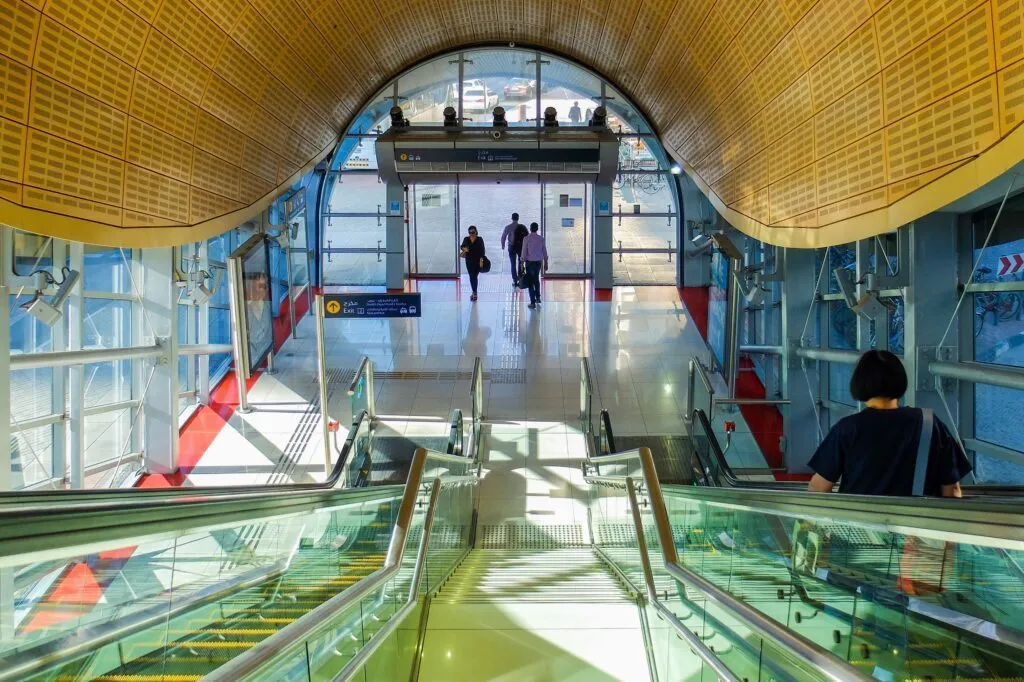
Fun Fact: The Dubai Metro began operating on September 9, 2009 at exactly 21:09:09, the date 9/9/9 chosen deliberately. At 52.1 kilometers the Red Line is, according to Guinness World Records, still the longest driverless metro line in the world; the title for the longest driverless metro network, however, has been held by the Riyadh Metro since late 2024. And the shell-shaped station roofs by the Aedas architecture firm recall Dubai’s history as a pearl-diving city.
With a Nol Silver Card, a single ride costs, depending on the zones you travel through, 3 AED (≈ $0.82, one zone), 5 AED (≈ $1.36, two zones) or 7.50 AED (≈ $2.04, more than two zones). The Gold Class costs double. The card itself costs 25 AED (≈ $6.81), including 19 AED (≈ $5.17) of credit; a 7-day pass for all zones is 110 AED (≈ $29.95), as of July 2026.
The standard is the rechargeable Nol Card. You hold the card to the reader when entering (tap in) and leaving (tap out); the fare is deducted automatically by zone. A minimum balance of 7.50 AED (≈ $2.04) is required to tap in. Cards and credit are available at vending machines, at counters, in the RTA Happiness Centres and via the official nol Pay app.
If you change between two modes of transport within 30 minutes, for example from the metro to a bus or the tram, it counts as a single trip. The fare is then charged by the total number of fare zones traveled, not per vehicle. This keeps a journey with several transfers affordable (as of July 2026).
The Red Line stops directly at Terminals 1 (R14) and 3 (R13) of DXB airport. Terminal 2 has no station of its own; from there you take a taxi or shuttle bus. It is around 25 to 30 minutes to Burj Khalifa/Dubai Mall station. Nol cards are available at counters and vending machines in Terminals 1 and 3.
Two lines currently run: the Red Line from Centrepoint to Expo 2020 (including the Route 2020 extension) and the Green Line from e&/Etisalat to Creek. The Blue Line will be added from September 2029, and the Gold Line follows in 2032.
You might also be interested in these metro maps – for comparison or for your next trip: