Mexico City Metro Map 2026: Lines, Tickets & Prices
Last updated: August 20, 2026

Last updated: August 20, 2026
Current Mexico City Metro Service Updates
Line 1 is operating from Pantitlán to Observatorio. Line 3 renewal work is being prepared, but no exact closure section or date has been announced. Check current service notices before traveling.
Use the official Mexico City Metro map PDF to compare line colors, terminal stations and transfer points.
The Mexico City Metro is also described as a subway by many US travelers. This guide uses the operator’s Metro terminology and keeps every separate bus, light-rail, cable-car and suburban-rail service outside the Metro totals.
Contents
Mexico City’s station pictograms grew from the original wayfinding system led by Lance Wyman, the designer of the Mexico 1968 Olympic identity.
The Sistema de Transporte Colectivo de la Ciudad de México, or STC, operates the network. It opened on September 4, 1969 and its current operating figures list 12 lines, 195 stations and more than 226 km.
SEMOVI reported 2026 passenger totals of 612,765,455 Metro trips from January 1 through June 30. Its figures list other modes separately, so the total excludes Metrobús, Tren Ligero, Trolebús and Cablebús.
The official first-quarter operating report states that Line 1 is fully open from Pantitlán to Observatorio.
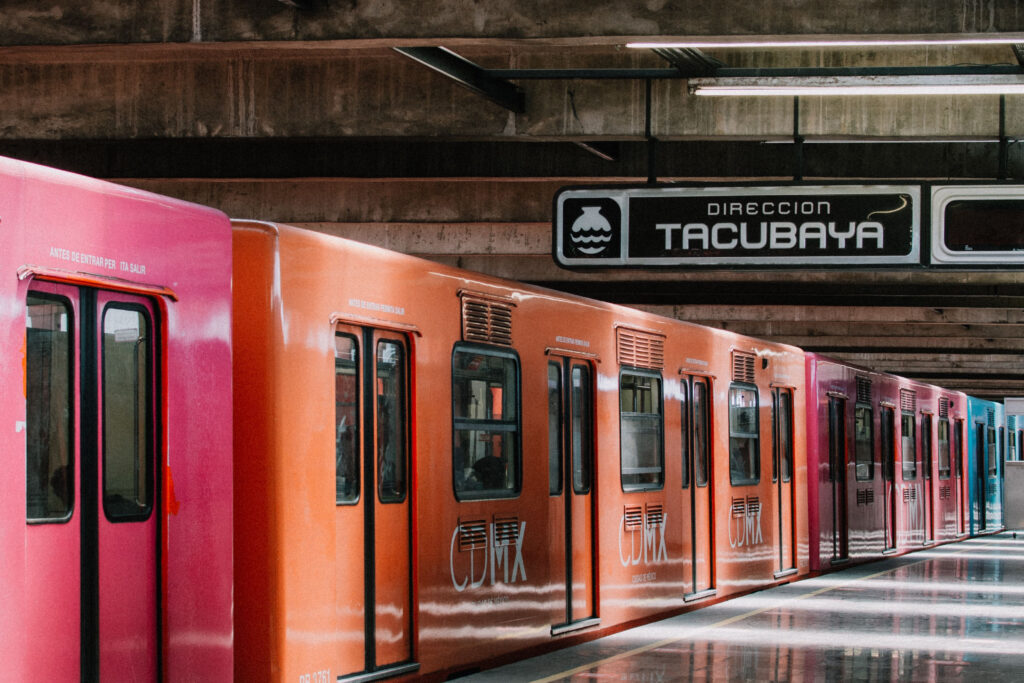
Read the CDMX Metro map by matching the line number or letter, line color and terminal name. The terminus shown on signs identifies the direction, while station pictograms make interchange points and destinations easier to recognize.
Map labels preserve Spanish station names such as Zócalo/Tenochtitlan and Insurgentes. Use the same names when comparing platform signs with the network diagram.
Metrobús, Tren Ligero, Cablebús, Trolebús and Tren Suburbano are separate networks and must be planned separately.
For a straightforward trip, find the station, identify the line color, choose the platform named for the correct terminus, pay at the gate, and repeat the line and terminus check at every interchange. Choose the marked exit closest to the destination.
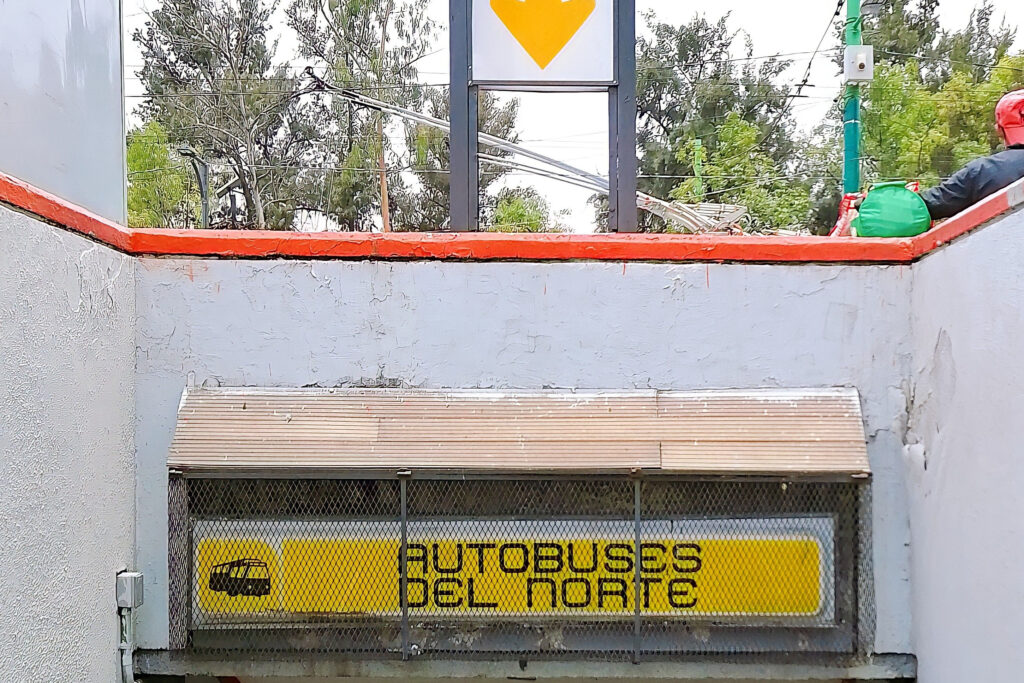
The Metro serves central sights directly, but reaching several well-known places requires a transfer to another system. To reach Xochimilco or Estadio Azteca, take the Tren Ligero from Tasqueña. To reach Teotihuacán, take an intercity bus after riding Line 5 to Autobuses del Norte.
The Tarjeta de Movilidad Integrada works across Metro, Metrobús, Tren Ligero, Trolebús, Cablebús and RTP. It is a common payment medium, not a single flat-fare pass, so each system deducts its own fare.
Marked exclusive zones for women and children under 12 operate throughout service hours on all 12 lines. Men and boys over 12 should use the mixed cars.
During crowded periods, carry bags in front and keep phones and wallets out of open or back pockets. This is practical transit advice rather than a reason to avoid the network.
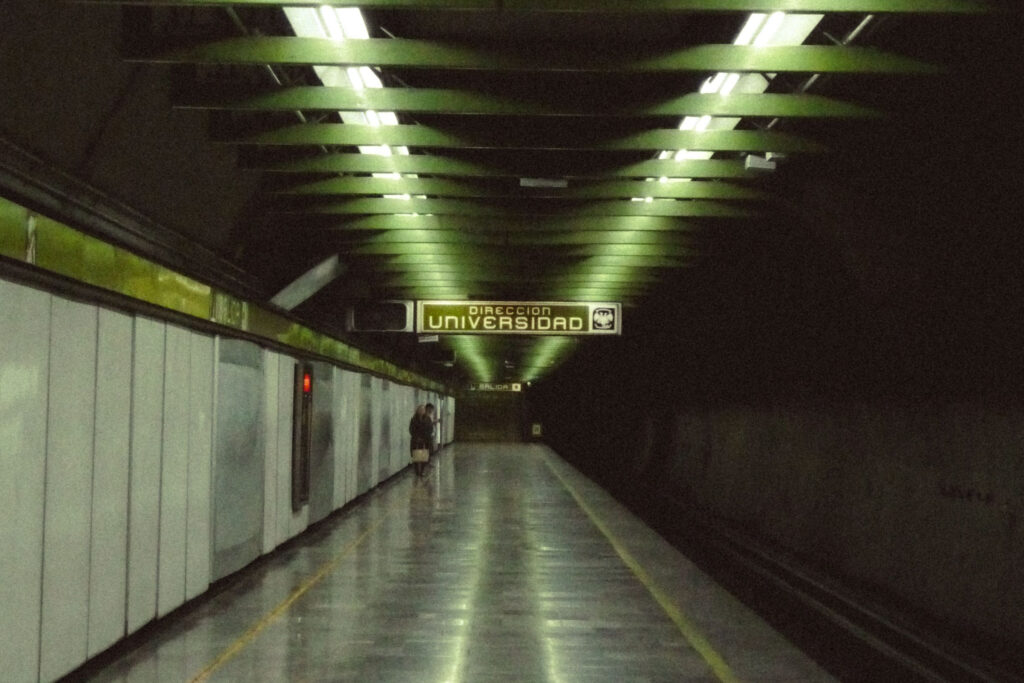
For the Zócalo, Cathedral and Templo Mayor, use Zócalo/Tenochtitlan on Line 2. The square and Cathedral are about 1 to 3 minutes away, while Templo Mayor is about 5 to 7 minutes on foot.
Bellas Artes on Lines 2 and 8 is 110 meters from Palacio de Bellas Artes. Auditorio on Line 7 is about 1.3 km from the Museo Nacional de Antropología in Chapultepec.
Casa Azul in Coyoacán is at Londres 247 in Colonia del Carmen. Use the full address to plan the final walk because no station-specific walking time is provided here.
The La Villa-Basílica station on Line 6 is about two blocks below the Basílica de Guadalupe entrance. Xochimilco and Estadio Azteca require the separate Tren Ligero from Tasqueña.
Teotihuacán has no Metro connection. Use Line 5 to Autobuses del Norte, then the intercity bus from bay 7 for a trip of about 60 minutes in normal traffic.
| Destination | Line | Station | Practical note |
|---|---|---|---|
| Zócalo, Cathedral and Templo Mayor | Metro Line 2 | Zócalo/Tenochtitlan | The square and Cathedral are about 1 to 3 minutes away; allow about 5 to 7 minutes to Templo Mayor. |
| Palacio de Bellas Artes | Metro Lines 2 and 8 | Bellas Artes | Mexico City's official visitor portal places Palacio de Bellas Artes 110 meters from Bellas Artes station; allow about 2 to 3 minutes after reaching street level. |
| Bosque de Chapultepec and Museo Nacional de Antropología | Metro Line 7 | Auditorio | The Museo Nacional de Antropología states that Auditorio station is about 1.3 km away; allow roughly 16 to 20 minutes on foot. |
| Casa Azul, Coyoacán | The museum is at Londres 247, Colonia del Carmen. | ||
| Basílica de Guadalupe | Metro Line 6 | La Villa-Basílica | Mexico City's official visitor portal places La Villa-Basílica station about two blocks below the Basilica's main entrance; allow about 5 minutes. |
| Estadio Azteca | Metro Line 2, then separate Tren Ligero | Tasqueña, then Estadio Azteca | Exit the Metro for the separately charged light rail; allow about 15 minutes on foot from its stadium stop. |
| Xochimilco canals | Metro Line 2, then separate Tren Ligero | Tasqueña, then Xochimilco | Exit the Metro for the separately charged light rail; the Belem landing area is about 10 minutes from its terminus. |
| Teotihuacán | Metro Line 5, then intercity bus | Autobuses del Norte | There is no Metro to the pyramids; use the bus counter at bay 7 for a trip of about 60 minutes in normal traffic. |
| MEX Airport Terminal 1 | Metro Line 5 | Terminal Aérea | The station requires a walk along the terminal building; Terminal 2 has no direct Metro station. |
The Metro uses a flat entry fare of MXN 5.00 (≈ USD 0.29), including transfers that remain inside the Metro paid area. Separate transport modes charge their own fares even when the same MI card pays for them.
The physical Tarjeta de Movilidad Integrada costs MXN 15.00 (≈ USD 0.88) before stored value is added. Its current maximum balance is MXN 500.00 (≈ USD 29.48).
Magnetic paper tickets are no longer offered as a standard Metro entry option. Supported contactless bank cards and mobile wallets on a phone or smartwatch work at enabled fare gates for the same MXN 5.00 (≈ USD 0.29) fare.
USD equivalents use the Banco de México (Banxico) FIX exchange rate dated August 19, 2026.
| Ticket | Price | Where to buy |
|---|---|---|
| Regular Metro entry | MXN 5.00 (≈ USD 0.29) | Pay at an enabled gate with a loaded MI card or supported contactless bank card or wallet |
| Physical Tarjeta de Movilidad Integrada | MXN 15.00 (≈ USD 0.88), plus stored value | Available at Metro ticket windows; recharge through App CDMX on Google Play or Apple App Store |
| Free travel for eligible passengers | MXN 0.00 (USD 0.00) | Available under the official Metro fare resolution for people age 60 and older, people with disabilities, children under five and on-duty police |
Prices as of August 2026; source: Sistema de Transporte Colectivo.
Buy the physical MI card at Metro ticket windows or official machines on Metrobús, Cablebús and Tren Ligero. Add value at windows, machines, more than 15,000 authorized locations, or through the official App CDMX on Google Play or the Apple App Store.
At the turnstile, tap the loaded MI card once or present a supported contactless bank card or mobile wallet on a phone or smartwatch to an enabled validator. Transfers inside the paid area are included; a separate system requires another validation and its own fare.
Normal operating hours are 5:00 AM to midnight Monday through Friday, 6:00 AM to midnight on Saturday, and 7:00 AM to midnight on Sunday and holidays. Service may run on a reduced schedule on special dates.
The final train can pass an individual station between midnight and about 12:25 AM, but this does not guarantee entry after midnight. Arrive before the advertised closing time, especially when a transfer is required.
Frequencies vary by line and time of day. Check official service information before time-critical airport or business trips instead of assuming a networkwide interval.
Line 3 renewal preparations were underway on June 22, 2026, with the city stating that interruptions would be minimized. No exact closure date or section was published in that announcement.
The airport’s ground transport information identifies Terminal Aérea on yellow Line 5 as the station for MEX Terminal 1. It sits outside the terminal building; Terminal 2 has no directly connected station.
Eligible connecting passengers with a boarding pass can use the free Aerotrén between terminals in about 5 minutes, daily from 5:00 AM to 11:00 PM. Boarding is at T1 door 6 and T2 door 4.
The public TETSA interterminal bus costs MXN 25.00 (≈ USD 1.47) one way, takes cash on board, and runs from 5:00 AM to 1:00 AM. It uses T1 door 7 and T2 door 4.
A Metro trip from Terminal 1 costs MXN 5.00 (≈ USD 0.29). One practical route to Bellas Artes uses Line 5 to Oceanía, Line B to Garibaldi/Lagunilla, then Line 8 to Bellas Artes. Allow extra time for the two transfers and walk from the terminal.
For heavy luggage, the airport’s own visitor guidance recommends another mode. Metrobús Line 4 serves Terminals 1 and 2 and the Historic Center for the MXN 30.00 airport fare (≈ USD 1.77), running 4:30 AM to midnight Monday through Saturday and 5:00 AM to midnight on Sundays and holidays.
AIFA has a different rail connection. The separate Tren Felipe Ángeles began passenger operation on April 26, 2026 and has run directly from Buenavista to AIFA through the Lechería branch.
From Zócalo, take Line 2 to Hidalgo, Line 3 to Guerrero and Line B to Buenavista, then cross the forecourt to the separate train. As of August 14, 2026, the minimum combined introductory fare with an existing MI card is MXN 50.00 (≈ USD 2.95) and is subject to change: the regular Metro entry costs MXN 5.00 (≈ USD 0.29) and the Tren Felipe Ángeles portion costs MXN 45.00 (≈ USD 2.65).
AIFA lists an initial Buenavista to AIFA travel time of about 60 minutes and an introductory fare of MXN 45.00 (≈ USD 2.65) to or from the airport as of August 14, 2026. The fare is subject to change. Check the day’s departure information before travel.
The most important 2026 story is modernization rather than a new operating Metro line. Line 1 is fully open between Pantitlán and Observatorio, while work programs cover Lines 2, 3 and A.
The Line 12 extension is currently being built toward Observatorio. Its project adds 4.6 km from Mixcoac to Observatorio, two intermediate stations, a new terminus and a depot, but has no firm opening date.
Observatorio is already open on Line 1. It is not yet an operating Line 12 station, a distinction that matters when reading a future Mexico City subway map against the current network.
Line 2’s 2026 improvement program covers 15 stations and includes track, electrical and signaling work, drainage, fire systems, cameras and trains. Renovated Tasqueña, General Anaya, Ermita and Portales stations were delivered on June 22.
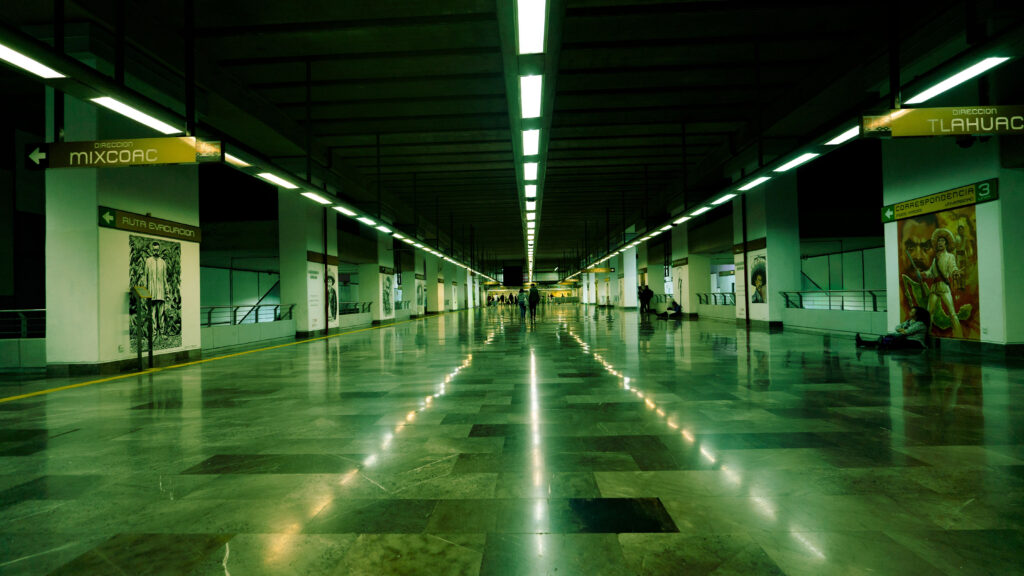
As of June 22, 2026, Line 3 renewal preparations were underway, but no exact closure section or date had been announced. The city’s February 2026 program announced structural corrections for Line A and framed a larger Line B intervention as a 2027 project.
Fun Fact: An INAH museum record describes a circular temple dedicated to Ehécatl-Quetzalcóatl, found during excavation of Pino Suárez station in 1969 and still visible inside the station.
Tap a loaded Tarjeta de Movilidad Integrada, supported contactless bank card or mobile wallet on a phone or smartwatch at an enabled validator. A regular entry costs MXN 5.00 (≈ USD 0.29).
A regular ride costs MXN 5.00 (≈ USD 0.29), including internal transfers inside the Metro paid area. The physical MI card costs MXN 15.00 (≈ USD 0.88) before stored value.
Regular travel is not free. Eligible passengers travel for MXN 0.00 (USD 0.00) under STC rules, including people age 60 and older, people with disabilities, children under five and on-duty police.
Match the line number or letter and color, then choose the platform named for the correct terminus. Pay at the gate, repeat those checks at interchanges, and select the marked exit nearest the destination.
Use normal crowded-transit precautions: carry bags in front and keep valuables out of open pockets. Marked exclusive areas for women and children under 12 operate throughout service hours on all 12 lines.
Yes, particularly for central destinations such as Zócalo, Bellas Artes and Chapultepec. Xochimilco, Estadio Azteca and Teotihuacán require separate light-rail or bus connections.
Yes. The service commonly called the Mexico City subway is officially the Mexico City Metro, operated by Sistema de Transporte Colectivo and comprising 12 lines.
Buy the physical MI card for MXN 15.00 (≈ USD 0.88) at Metro ticket windows. Official machines on Metrobús, Cablebús and Tren Ligero also sell the card.
From Terminal 1, walk to Terminal Aérea on Line 5. Terminal 2 has no direct station; eligible connecting passengers can use the Aerotrén, while the public TETSA bus to Terminal 1 costs MXN 25.00 (≈ USD 1.47).
Travel by Metro to Buenavista on Line B, then change to the separate direct Tren Felipe Ángeles. As of August 14, 2026, the minimum combined introductory fare from Zócalo with an existing MI card is MXN 50.00 (≈ USD 2.95) and is subject to change; the train portion takes about 60 minutes.
No. Take Line 5 to Autobuses del Norte, then use the intercity bus from bay 7. The bus operator gives a travel time of about 60 minutes in normal traffic.
Take Line 2 to Tasqueña, leave the Metro and tap the MI card again for the separate Tren Ligero to Xochimilco. The Belem landing area is about 10 minutes from the light-rail terminus.
You might also be interested in these metro maps – for comparison or for your next trip: