Toronto Subway Map 2026 (TTC): Lines, Tickets & Prices
Last updated: 17 July 2026

Last updated: 17 July 2026
Current Toronto Subway service alerts
Check the official TTC Service Alerts immediately before travel. This guide links to the live source but does not reproduce a momentary operating status.
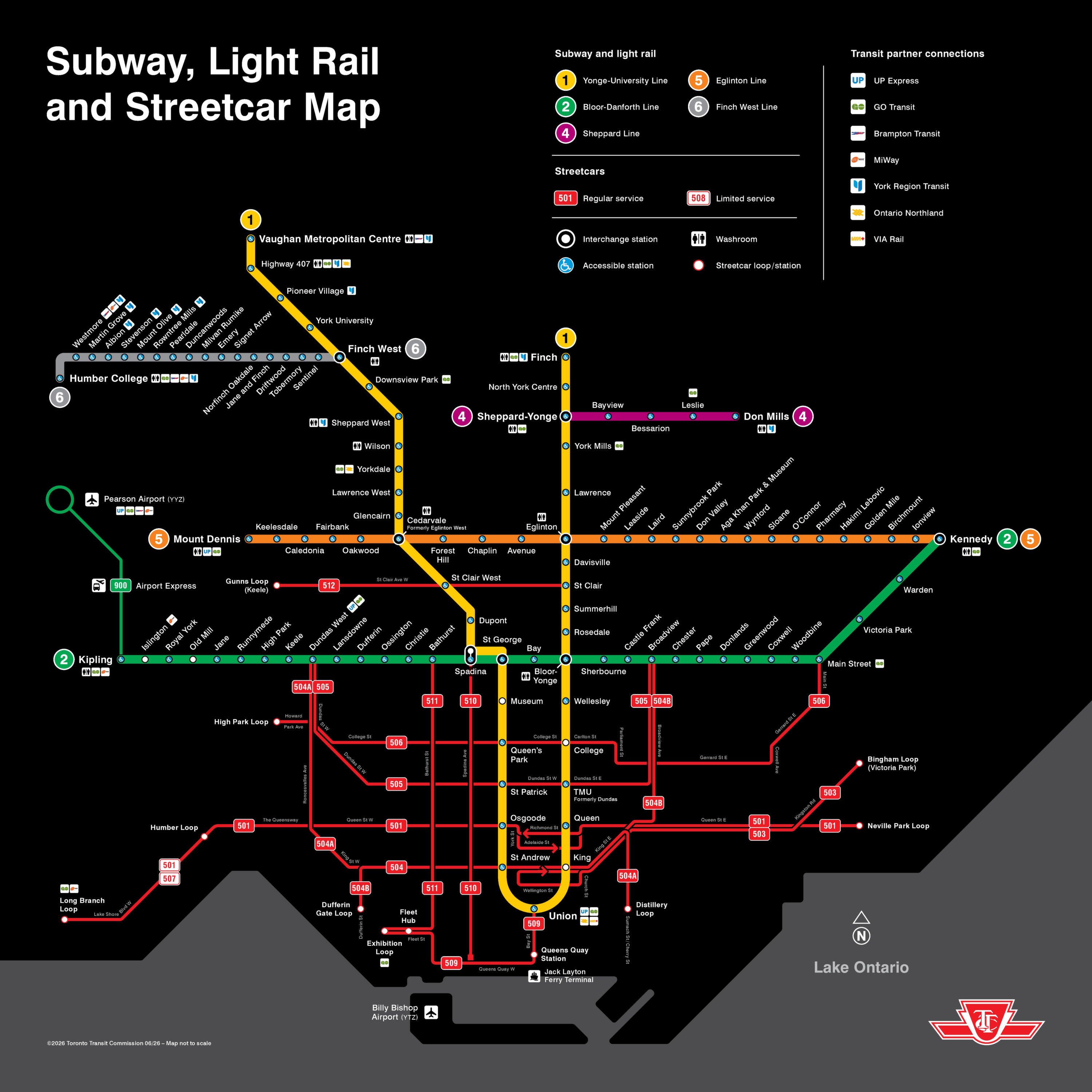
The official Toronto Subway Map is the June 2026 Toronto Transit Commission (TTC) Subway, Light Rail and Streetcar Map. The downloadable PDF covers Subway and LRT lines, streetcars and transit-partner connections.
This TTC map is the best starting point for planning a rail journey across Toronto. A separate printable version, full system map, Downtown Map and Blue Night Network Map help with more specific trips.
Toronto opened Canada’s first subway line in 1954, beginning with the original Yonge route between Eglinton and Union. That history makes the current Toronto Subway Map especially useful because today’s rail network now combines different modes and operating statuses.
The Toronto Transit Commission operates three conventional Subway lines with 70 unique stations and 70.1 km of one-way route length. TTC recorded 345.4 million Subway boardings in 2025.
The current network is easy to misread if every numbered line is called Subway. Lines 1, 2 and 4 are conventional Subway. Lines 5 and 6 are light rail transit, usually shortened to LRT. Line 3 Scarborough RT is no longer operating.
The official TTC map is available in five English PDF variants, each serving a different planning need:
The five TTC map PDFs were current on 17 July 2026. The TTC routes and schedules page is the source for these maps and current timetable information.
Line 3 Scarborough RT ran its last train on 24 July 2023. TTC confirmed the permanent closure a month later, and bus replacement service now operates instead.
Line 5 Eglinton is a 19 km LRT from Mount Dennis to Kennedy with 25 stops. Passenger service began on 8 February 2026, but TTC still described its operation as a phased opening on 17 July 2026.
Line 6 Finch West is a 10.4 km LRT from Finch West to Humber College with 18 stops. It moved to full operations on 15 March 2026. Neither LRT should be counted as a conventional Subway line.
| Line | Mode | 2026 status | Termini | Key transfer information |
|---|---|---|---|---|
| Line 1 Yonge-University | Subway | Active | Finch to Vaughan Metropolitan Centre | Union connects with UP Express |
| Line 2 Bloor-Danforth | Subway | Active | Kipling to Kennedy | Kennedy connects with Line 5 LRT |
| Line 4 Sheppard | Subway | Active | Sheppard-Yonge to Don Mills | Sheppard-Yonge connects with Line 1 |
| Line 3 Scarborough RT | Former SRT | Permanently closed; bus replacement operates | Formerly Kennedy to McCowan | Not an active rail line |
| Line 5 Eglinton | LRT | Phased passenger service | Mount Dennis to Kennedy | Kennedy connects with Line 2 |
| Line 6 Finch West | LRT | Full operations | Finch West to Humber College | Finch West connects with Line 1 |
The official network map helps visitors pair central destinations with the right line and station. Destination Toronto recorded 28.2 million visitors in 2025, and many major sights in the table below are reached from Line 1.
| Destination | Line | Station | Practical note |
|---|---|---|---|
| CN Tower | Line 1 | Union | Follow signs to the SkyWalk, then continue west to the CN Tower. |
| Royal Ontario Museum | Line 1 | Museum | This is the closest stop. Use accessible St George if an elevator is required. |
| Art Gallery of Ontario | Line 1 | St Patrick | Walk west along Dundas Street West to McCaul Street. |
| Casa Loma | Line 1 | Dupont | Walk north on Spadina and choose the Baldwin Steps or the hill west of the castle. |
| Hockey Hall of Fame | Line 1 | King | Enter Brookfield Place and follow PATH or concourse signs. |
| Old City Hall | Line 1 | Queen | The accessible ramp is reached from Albert Street. |
| Toronto General Hospital | Line 1 | Queen's Park | The hospital is on the east side of University Avenue, south of College Street. |
| St. Lawrence Market | Line 1 | King | Walk east toward Front Street East and Jarvis Street. |
Pearson Airport (YYZ) does not have a direct TTC Subway station. From downtown, take Line 1 to Union Station, follow signs through Union to the UP Express terminal in the SkyWalk, then ride to Pearson Station at Terminal 1.
UP Express trains run every 15 minutes and the Union to Pearson trip takes 28 minutes. Terminal 3 passengers can use the free Terminal Link train to Terminal 1.
The standard adult Union to Pearson fare is CA$12.35, approximately US$8.80. The adult PRESTO fare is CA$9.25, approximately US$6.59. UP Express requires a separate fare and is excluded from the One Fare Program.
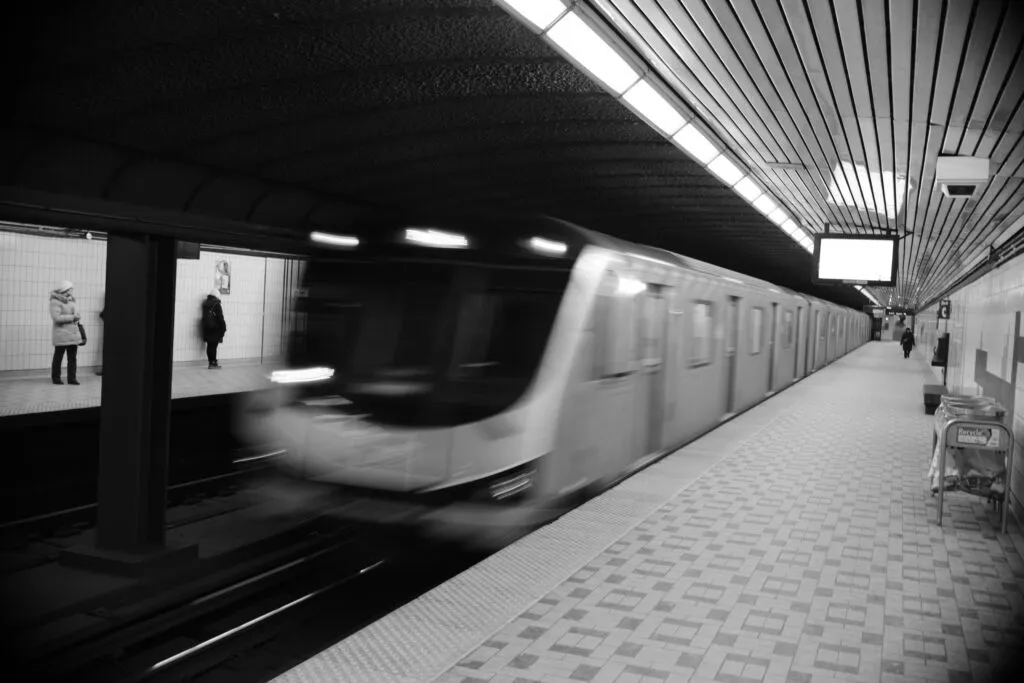
The Line 1 to Union Station and UP Express route is a clear downtown rail route, not a universal recommendation for every origin.
Billy Bishop Airport (YTZ) has different connections. Change from Line 1 at Union to streetcar 509, or from Line 2 at Bathurst to streetcar 511. A separate free airport shuttle also runs from opposite Union.
According to TTC Fares and passes, visitors can pay TTC fares with a PRESTO card, a non-reloadable PRESTO TTC Ticket, cash, or an accepted contactless credit card, debit card or mobile wallet.
The fares below were verified on 17 July 2026. Approximate US-dollar amounts use the Bank of Canada daily average of 1 CAD to US$0.7124 for 16 July 2026.
| Ticket | Price | Buy ticket |
|---|---|---|
| Adult fare with PRESTO card or contactless payment | CA$3.30 (approximately US$2.35) | PRESTO for iOS, PRESTO for Android, or contactless payment information |
| PRESTO one-ride ticket | CA$3.35 (approximately US$2.39) | Available locally |
| PRESTO two-ride ticket | CA$6.70 (approximately US$4.77) | Available locally |
| PRESTO day pass | CA$13.50 (approximately US$9.62) | Available locally |
| Adult cash fare | CA$3.35 (approximately US$2.39) | Available locally; exact cash required |
The linked PRESTO listings for iOS and Android identify Metrolinx as the publisher. The PRESTO app supports card setup, loading and management, but you do not need the app to tap an accepted contactless payment card on TTC.
PRESTO TTC Tickets are sold at official local machines and outlets, and they activate on the first tap. A physical PRESTO card costs CA$4.00, approximately US$2.85. A new digital PRESTO card in Apple Wallet or Google Wallet is free.
Tap the same PRESTO card, contactless card or device whenever you transfer. A two-hour transfer is included with PRESTO, TTC Tickets and contactless payment. Cash provides only a paper transfer for a continuous one-way journey.
One payment medium cannot pay for several riders at the same time. Children aged 12 and under ride free, while each passenger aged 13 or older needs a separate payment medium.
Visa, Mastercard, American Express, Interac, Visa Debit, Debit Mastercard, Apple Pay and Google Pay are accepted. International credit cards and supported debit products can work, although issuer exchange rates and foreign-transaction fees may apply.
The One Fare Program covers eligible transfers between TTC, GO Transit and participating regional transit systems. Use physical or digital PRESTO, or an eligible contactless credit or debit card.
Cash, PRESTO TTC Tickets, PRESTO E-Tickets and GO Tickets do not qualify for One Fare. The transfer window is two hours when starting locally and three hours when starting on GO. Always tap off on GO.
Subway trains do not run around the clock. In the official TTC Service Summary valid through 25 July 2026, first terminal departures ranged from 5:31 a.m. to 5:41 a.m. on weekdays and from 7:42 a.m. to 8:05 a.m. on Sundays.
Last terminal departures varied by line and direction from 1:20 a.m. to 2:25 a.m. These are terminal times, not universal station opening or closing times. Check the TTC timetable for the station and travel date.
Line 1 weekday intervals ranged from 2 minutes 30 seconds to 5 minutes. Line 2 ranged from 2 minutes 20 seconds to 4 minutes 50 seconds. Line 4 ran every 5 minutes 30 seconds in each listed period.
Weekend intervals were generally longer. Line 1 ran every 3 minutes 53 seconds to 5 minutes on Saturdays. Line 2 reached 6 minutes on Saturdays, while Sunday intervals were approximately 4 minutes 52 seconds to 5 minutes 14 seconds.
When Subway service stops, the Blue Night Network covers major corridors from approximately 1:30 a.m. until rail service starts. Buses run every 30 minutes or better, seven days a week.
The key corridor routes are 300 Bloor-Danforth, 320 Yonge and 385 Sheppard East. They are not stop-for-stop replacements, and route 320 does not cover the western arm of Line 1.
For same-day operations, use TTC Service Alerts. The PDF map and this guide do not provide a live running-status feed.
Current service and future construction must be read separately. Line 5 and Line 6 are operating LRT routes, while the Ontario Line and Subway extensions remain future projects.
The Ontario Line is planned as a 15.6 km route with 15 new stations. Construction is underway, and downtown tunnelling began in April 2026. Current official sources do not confirm an opening year.
The Scarborough Subway Extension is a future 7.8 km, three-station extension of Line 2. Tunnelling passed halfway in early 2026, but current sources do not give a confirmed opening year.
The Yonge North Subway Extension is planned at approximately 8 km with five stations. It is intended to enter service after the Ontario Line, while procurement and project development remain active.
Accessibility also varies by station. In TTC’s spring 2026 accessibility update, 64 of the 70 conventional Subway stations were accessible. All Subway trains can carry mobility-device users, but riders should check current elevator status before travel.
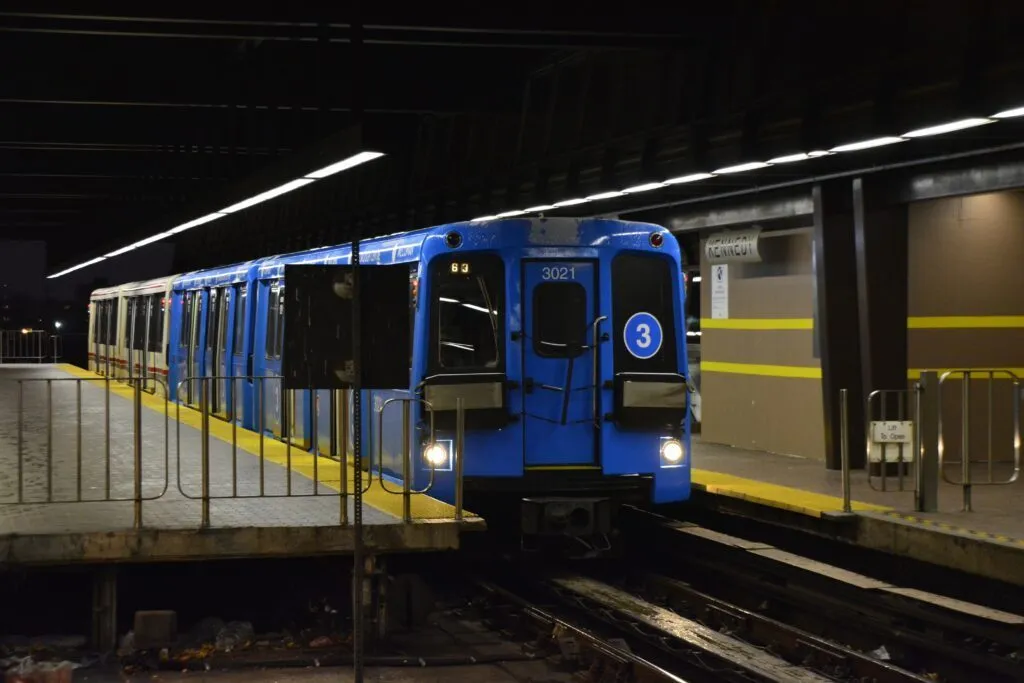
Fun Fact: More than 200,000 people rode Toronto’s new subway on opening day, 30 March 1954. Public service began after 1:30 p.m., and a cash fare cost ten cents.
You might also be interested in these metro maps – for comparison or for your next trip:
No. Pearson Airport has no direct Subway station. From downtown, take Line 1 to Union, change to UP Express in the SkyWalk, and ride 28 minutes to Terminal 1. Trains run every 15 minutes.
Use a PRESTO card, PRESTO TTC Ticket, accepted contactless credit or debit card, Apple Pay, Google Pay, or exact cash. Use the same card or device throughout a transfer journey.
An adult ride costs CA$3.30, approximately US$2.35, with PRESTO or contactless payment as of 17 July 2026. Cash and a PRESTO one-ride ticket cost CA$3.35, approximately US$2.39.
The last terminal departures in the schedule valid through 25 July 2026 ranged from 1:20 a.m. to 2:25 a.m. Exact times depend on the line, direction and station. Blue Night buses then cover major corridors.
Line 5 Eglinton and Line 6 Finch West are operating LRT routes in 2026. The Ontario Line, Scarborough Subway Extension and Yonge North Subway Extension are construction or expansion projects, not active Subway lines.
Partly. TTC reported 64 of 70 conventional Subway stations accessible in spring 2026, and all Subway trains can carry mobility-device users. Check the specific station and elevator status before travel.