Porto Metro Map 2026: Lines, Tickets and Prices
Last updated: August 20, 2026

Last updated: August 20, 2026
Current Porto Metro service updates
Metro do Porto publishes live status entries for Lines A to F on its service update page. Check the relevant line before traveling, particularly when making an airport or long-distance rail connection.
The official one-page Metro do Porto map uses Portuguese and English legend labels and carries an April 2024 edition date.
Metro do Porto describes its 70 km system as one of Europe’s largest light-rail networks.
The network opened to passengers on December 7, 2002. It currently serves seven municipalities.
Metro do Porto’s August 2026 figures list 85 stations, including 15 underground stations. Five tunnels total 8.3 km, which explains why the network can feel like an underground metro in the center and light rail farther out.
Metro do Porto S.A. is the concession holder and network company. The operator’s corporate information identifies ViaPorto as the subconcessionaire responsible for operation and maintenance, without giving a reliable current contract end date.
Metro do Porto recorded more than 94.5 million ticket validations in 2025, 5.4 percent more than in 2024. This is a validation count, not a count of unique passengers.
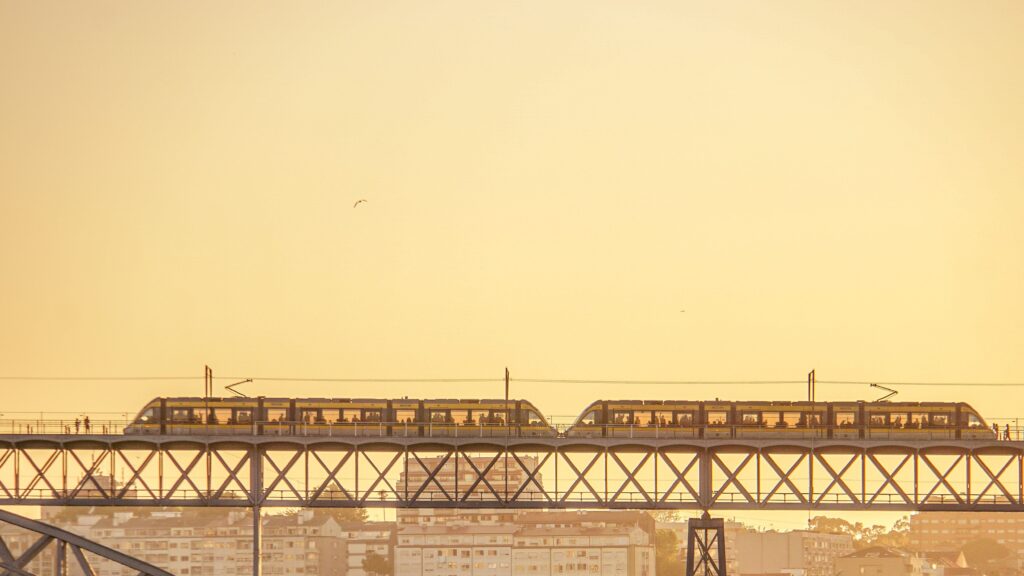
The network is technically a light-rail or light-metro system. Its city-center tunnels and underground stations create a subway experience, while many outer sections run above ground, sometimes close to street level.
Travelers may search for a Porto subway map, but that shorthand should not hide the network’s mixed design. The official local name is the clearest term for this mixed urban rail system.
The six operating services are Lines A to F. Historic Porto Tram services, CP Urbanos suburban trains and the Funicular dos Guindais are separate systems. The first hydrogen-powered MetroBus section opened in February 2026. MetroBus is a BRT (bus rapid transit) service, not a rail line.
Pink Line G and Rubi Line H are not part of the open network. Official project records identify both as construction projects in 2026, and they are covered separately below.
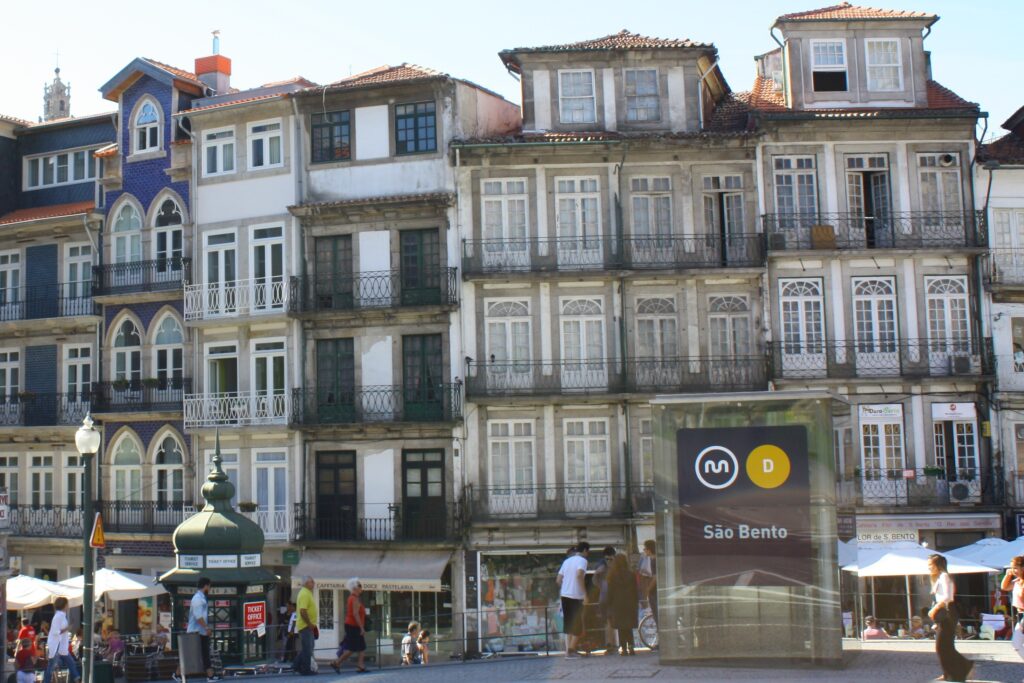
The network reaches many important visitor districts, but not every attraction has a door-to-door station. Ribeira requires a downhill walk from São Bento, while the Port wine cellars in Gaia lie below Jardim do Morro.
Each attraction is paired with a practical metro line and station, with notes on hills, walks and connections beyond the rail network.
| Attraction or destination | Line | Station | Practical note |
|---|---|---|---|
| Ribeira and the Old Town riverfront | D | São Bento | The metro does not stop on the Ribeira quayside. Walk downhill through the historic center or use the separate Guindais funicular; the return is steep. |
| Livraria Lello | D | Aliados | Leave the metro at Aliados and walk uphill to Rua das Carmelitas 144, where the bookshop stands. São Bento works equally well as a starting point on the same central route. |
| Casa da Música | A, B, C, E, F | Casa da Música | The existing Casa da Música station is open; Casa da Música II is a separate future underground station. |
| Estádio do Dragão and FC Porto Museum | A, B | Estádio do Dragão | The station is at the stadium complex. Matchday crowds can make trains and platforms busier. |
| Vila Nova de Gaia and the Port wine cellars | D | Jardim do Morro | This stop serves the upper Gaia riverfront. Most cellars lie downhill at different addresses, so expect steep streets or a separate cable-car connection. |
| Matosinhos seafront and restaurants | A | Matosinhos Sul | For the central seafront, use Matosinhos Sul rather than the Senhor de Matosinhos terminus. |
| Bolhão Market | A, B, C, F | Bolhão | The rebuilt market has a direct connection from the station. Airport passengers can transfer at Trindade to the other metro lines. |
Francisco Sá Carneiro Airport, or OPO, has its own Aeroporto station on Line E. Violet Line trains reach Trindade directly in about 30 minutes, so no change is needed for that central interchange.
Line E runs directly from Aeroporto to Trindade in about 30 minutes and requires a Z4 ticket. Every day, Metro do Porto schedules Line E at 15-minute intervals from 7:00 AM to 8:00 PM, 20-minute intervals until 11:00 PM, and 30-minute intervals from 6:00 AM to 7:00 AM and 11:00 PM to 1:00 AM.
Aeroporto to Trindade requires four zones, or Z4. The 2026 Simple fare is 2.30 EUR (≈ 2.66 USD), plus 0.60 EUR (≈ 0.69 USD) if a new Andante Blue card is needed.
Trindade is not every traveler’s final destination. Bolhão, São Bento, Ribeira and Gaia may require a transfer, a walk or both, so allow extra time beyond the 30-minute airport run.
Andante is the intermodal ticket system for metro, bus and suburban rail in the Porto area. Occasional fares use zone rings around the zone of first validation, with Z2 as the minimum.
Andante’s published 2026 visitor tariff covers Z2 to Z9; it does not list current Z10 to Z12 prices. A Simple ticket permits transfers within the zones and validity period covered by the ticket.
Andante Tour 1 and Tour 3 cover the wider intermodal network for 24 or 72 hours. They do not cover the historic STCP trams or Funicular dos Guindais and cannot be reloaded.
| Ticket | Price | Buy ticket |
|---|---|---|
| Andante Blue card | 0.60 EUR (≈ 0.69 USD). One non-personalized, reloadable paper card. | Top up an existing physical card with Anda on Google Play or Apple App Store. |
| Z2 Simple / Andante 24 | Simple: 1.40 EUR (≈ 1.62 USD), valid 1 hr / Andante 24: 5.35 EUR (≈ 6.18 USD). | Available locally |
| Z3 Simple / Andante 24 | Simple: 1.85 EUR (≈ 2.14 USD), valid 1 hr / Andante 24: 6.85 EUR (≈ 7.91 USD). | Available locally |
| Z4 Simple / Andante 24 | Simple: 2.30 EUR (≈ 2.66 USD), valid 1 hr 15 min / Andante 24: 8.55 EUR (≈ 9.88 USD). | Available locally |
| Z5 Simple / Andante 24 | Simple: 2.80 EUR (≈ 3.24 USD), valid 1 hr 30 min / Andante 24: 10.25 EUR (≈ 11.84 USD). | Available locally |
| Z6 Simple / Andante 24 | Simple: 3.25 EUR (≈ 3.76 USD), valid 1 hr 45 min / Andante 24: 12.20 EUR (≈ 14.10 USD). | Available locally |
| Z7 Simple / Andante 24 | Simple: 3.75 EUR (≈ 4.33 USD), valid 2 hr / Andante 24: 13.90 EUR (≈ 16.06 USD). | Available locally |
| Z8 Simple / Andante 24 | Simple: 4.20 EUR (≈ 4.85 USD), valid 2 hr 15 min / Andante 24: 15.60 EUR (≈ 18.02 USD). | Available locally |
| Z9 Simple / Andante 24 | Simple: 4.65 EUR (≈ 5.37 USD), valid 2 hr 30 min / Andante 24: 17.30 EUR (≈ 19.99 USD). | Available locally |
| Andante Tour 1 | 7.75 EUR (≈ 8.95 USD), valid for 24 consecutive hours across the Andante network. | Available locally at official visitor sales points |
| Andante Tour 3 | 16.55 EUR (≈ 19.12 USD), valid for 72 consecutive hours across the Andante network. | Available locally at official visitor sales points |
Prices as of August 6, 2026; source: Andante and the ECB reference rate for August 5, 2026 (1 EUR = 1.1554 USD).
Andante Tour is sold at Andante shops, the airport tourism point, participating CP counters, municipal sales points and marked Payshop agents.
Validate before starting and again whenever changing line or transport mode, no more than ten minutes before travel. Confirm the green light and audible signal, then retain the card or active app throughout the journey.
Anda tops up physical cards on both Android and iPhone. On Android, the app also works as a validated digital post-paid ticket; on iPhone it currently handles card top-up only, so keep your physical Andante card with you.
The Android listing names TMP, Transportes Metropolitanos do Porto, as provider; Apple names TIP, Transportes Intermodais do Porto.
Bank-card contactless remained a limited pilot on August 6, 2026. It works only at marked validators when boarding Line E at Aeroporto, Senhora da Hora, Casa da Música or Trindade.
For Lines A, B, C, D and F, pilot boarding is limited to Campanhã, Bolhão, Campo 24 de Agosto, São Bento and Aliados. Physical or virtual Visa and Mastercard payment is documented.
Each pilot journey charges the Z4 fare of 2.30 EUR (≈ 2.66 USD) for 1 hr 15 min. From the fourth journey onward, the documented daily cap is 7.75 EUR (≈ 8.95 USD).
Metro do Porto describes the overall operating window as roughly 6:00 AM to 1:00 AM.
Metro do Porto’s current timetable and frequency files took effect on July 20, 2026. Use the official current timetable and frequency files to check the relevant line and time of day, then confirm the station, direction and departure in the journey planner for your travel date.
Line E runs directly from Aeroporto to Trindade in about 30 minutes and requires a Z4 ticket. Every day, Metro do Porto schedules Line E at 15-minute intervals from 7:00 AM to 8:00 PM, 20-minute intervals until 11:00 PM, and 30-minute intervals from 6:00 AM to 7:00 AM and 11:00 PM to 1:00 AM.
For Lines A, B, C, D and F, frequencies differ by line, day and time of day. Plan peak, daytime and late-evening trips with the operator’s current timetable and frequency files rather than with a single network-wide interval.
The rail system does not run overnight after its roughly 1:00 AM close. Use the journey planner above for late-night travel options.
Only Lines A to F were in regular passenger operation on August 6, 2026. Pink G, Rubi H and the other projects below are not part of the open network.
| Component | Status on August 6, 2026 | Project details | Traveler meaning |
|---|---|---|---|
| Lines A to F | Open | Six lines, 70 km and 85 stations (Metro do Porto network figures) | Lines A to F carry regular passenger service. |
| Pink Line G | Under construction | About 3 km underground with four new stations (Metro do Porto project description) | Do not plan a journey on Line G until an official opening is published. |
| Rubi Line H | Under construction | 6.7 km, eight stations, about 4.5 km of tunnel and an approximately 600 m bridge (Metro do Porto appraisal, June 2025) | Early 2027 is a planning assumption from an appraisal model, not a guaranteed opening date. |
| Casa da Música II / Boavista | Project interchange | New underground Pink facility intended to receive the Rubi terminus (Metro do Porto project update) | The existing Casa da Música station remains open; the new underground station is not yet open to passengers. |
| Asprela extension | Study only | A 2021 Metro do Porto study considered 3.7 km and five stations towards Polo Universitário and Roberto Frias | The study did not constitute government approval, so this is not an open or under-construction route. |
| MetroBus | First section open | 4 km and seven stations from Casa da Música to Praça do Império (Portuguese government announcement, February 2026) | This hydrogen-bus BRT is separate from the rail lines. |
The Pink Line G is a fully underground link between Casa da Música and Liberdade/São Bento via Galiza and Hospital Santo António. Metro do Porto project updates showed station works continuing in May 2026. Travelers should wait for an official opening notice before planning a Line G journey.
The Rubi Line H is planned from Boavista/Casa da Música to Santo Ovídio with eight stations. Construction was still active in March 2026; an operator appraisal assumed early 2027 commissioning, which is not a guarantee.
Rubi includes about 4.5 km of tunnel and an approximately 600 m Douro bridge.
Casa da Música II is part of the Pink project and intended as the Rubi endpoint. It is separate from the existing station, which already serves A, B, C, E and F.
The study did not constitute government approval. No construction approval or start has been announced.
Fun Fact: Porto’s metro is also an architecture project on a citywide scale. Eduardo Souto de Moura, later a Pritzker Architecture Prize recipient, served as chief architect for the network’s first phase from 1997 to 2005.
Use the PDF Download button beneath the viewer: city-rails serves a copy of Metro do Porto's official network map file. The one-page diagram uses Portuguese and English legend labels and was the operator's current file on August 6, 2026.
Line E runs directly from Aeroporto to Trindade in about 30 minutes and requires a Z4 ticket. Every day, Metro do Porto schedules Line E at 15-minute intervals from 7:00 AM to 8:00 PM, 20-minute intervals until 11:00 PM, and 30-minute intervals from 6:00 AM to 7:00 AM and 11:00 PM to 1:00 AM.
Occasional tickets use zone rings around the first validated zone, with Z2 as the minimum. Buy enough zones for the full journey, validate no more than ten minutes before travel and validate again when changing line or transport mode. Check for the green light and confirmation sound.
The general operating window is roughly 6:00 AM to 1:00 AM. First and last trains vary by station, direction and line, so check the journey planner for the exact service, especially for early flights or late arrivals.
It is technically a light-rail or light-metro system: central tunnels create a subway-like experience, while extensive outer sections run above ground. Pink Line G and Rubi Line H remained under construction in 2026 and were not open passenger lines.
You might also be interested in these metro maps – for comparison or for your next trip: