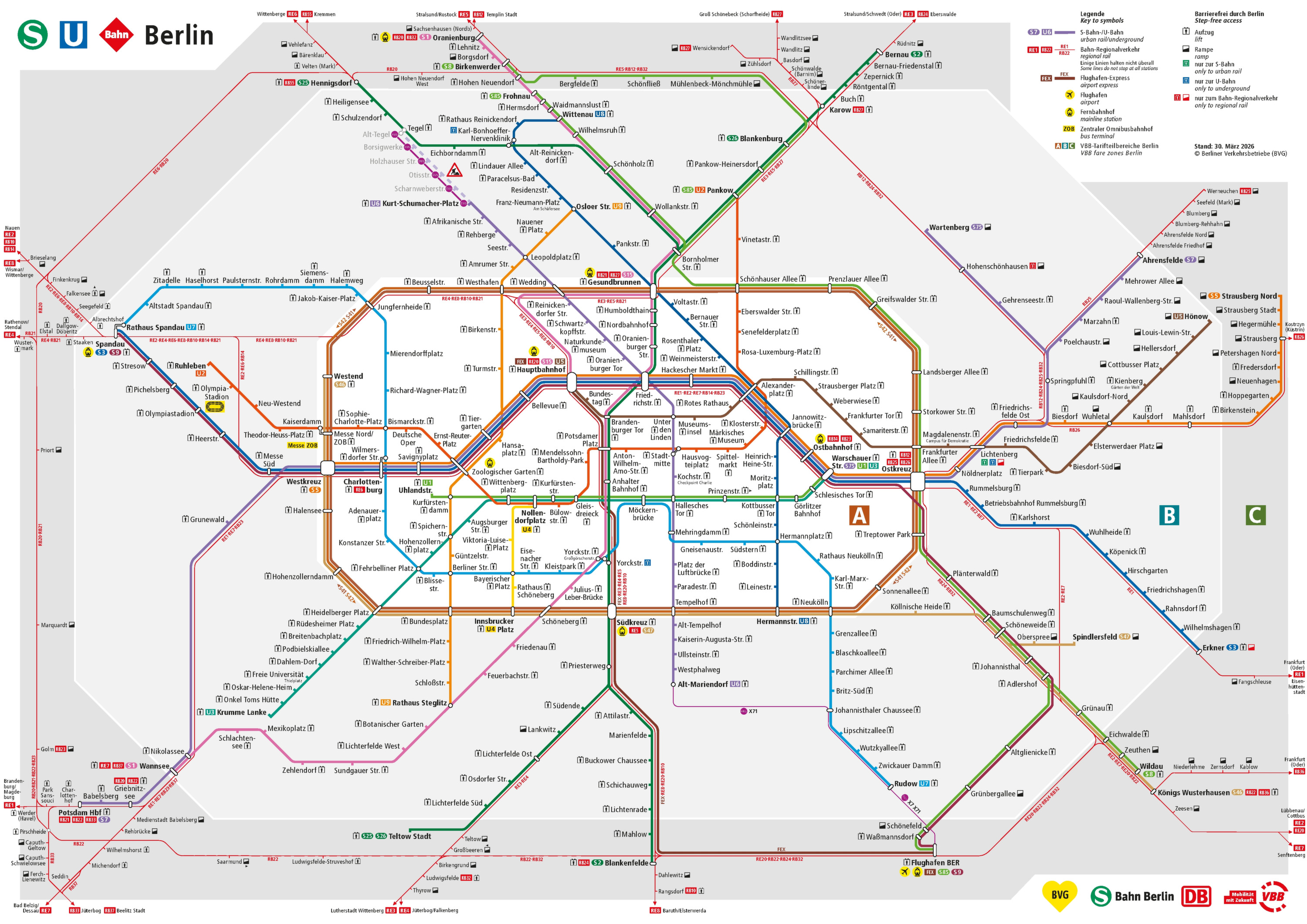
Berlin Metro Map 2026 (Underground) – Timetable, Tickets & Prices
Last updated: October 21, 2026

Last updated: October 21, 2026
With a total daily line length of 155.4 kilometers and currently 175 stations, Berlin has the largest subway network in Germany. The Berlin subway network, which has been in use since 1902, is under the auspices of Berliner Verkehrsbetriebe (BVG) and currently records several hundred million passenger journeys annually on its nine lines. In 2025 alone, BVG reported 556.4 million subway passenger journeys; in 2024, the U7, U8 and U6 were particularly busy on weekdays.
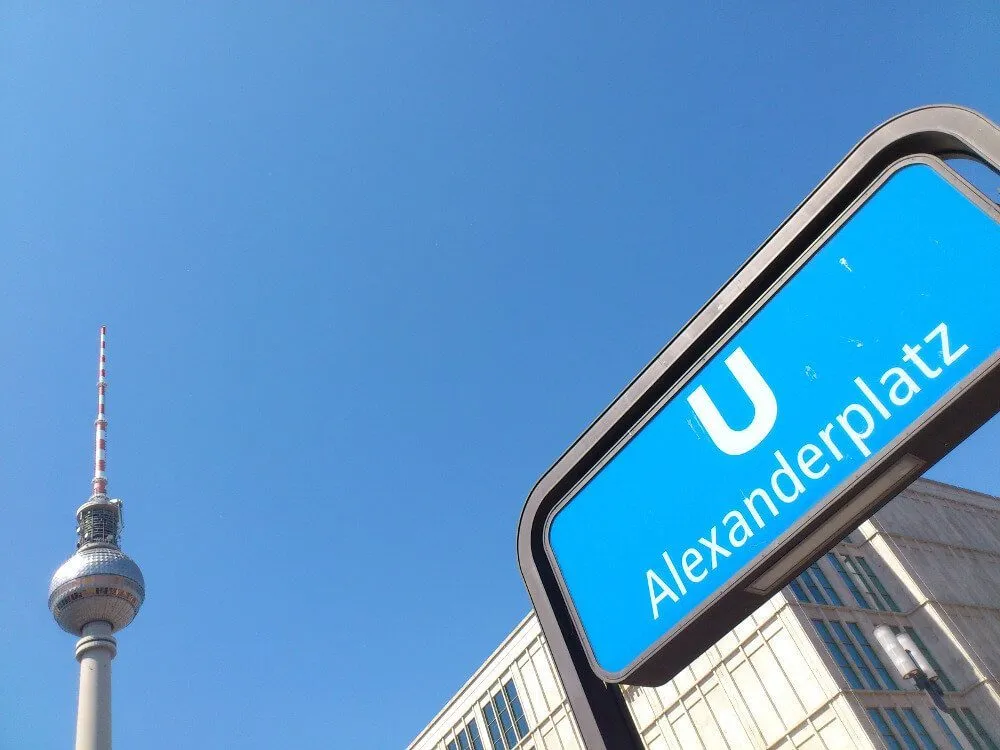
As in many other major international cities, the subway lines in Berlin have been clearly recognizable by the “U” in front of them on the subway timetable since they were renamed in 1984. This clearly differentiates them from the S-Bahn, bus and streetcar network. The Berlin subway network should not be confused with the Metrotram lines, which are preceded by a capital “M”.
Since the beginning of the new millennium at the latest, Berlin has become a hot spot for tourists from Germany and abroad. Between 2010 and 2015 alone, the number of visitors to the capital climbed by 40 percent from around 9 million to well over 12 million. In 2025, around 12.4 million guests were recorded at Berlin accommodation establishments. Berlin’s subway network is also important for visitors, since many sights are several kilometers apart.
Landmarks such as the Brandenburg Gate, Museum Island and the Reichstag can be easily reached by subway. As a result, many visitors need to consult the subway plan in Berlin. As in any major city with an extensive subway network, the question always arises for out-of-towners as to which subway ticket is the right one for which price.
While local public transport in many other cities is made up of various independent ticket systems, causing confusion among tourists in particular, this is handled much more simply in the German capital. If you buy a subway ticket in Berlin, you can also use all other means of transport in the Berlin Brandenburg Transport Association (VBB). In addition to subway trains, this also includes suburban trains, buses, streetcars, ferries and regional trains.
The final ticket price depends on the period of validity and the fare zone selected. There are basically three different fare zones in Berlin. These result from the three sub-areas into which the public transport network is divided. While sub-area A comprises the city center including the S-Bahn ring, sub-area B extends from there to the city limits. Outside the city limits, sub-area C extends within a radius of approx. 15 kilometers, which also includes journeys to and within Potsdam. However, if you want to buy a subway ticket in Berlin, it’s easy, as there are only three possible fare zone combinations.
A classic single ticket is valid in one direction for two hours. This means that it is also possible to change in the same direction. However, round trips and the return journey towards the starting point are excluded. For tourists who want to stay in the city for several days, we recommend the “WelcomeCard”, which allows unlimited use of the subway network. This special ticket is offered in validity periods from 48 hours to 6 days. It also gives you bonuses and discounts, such as reduced admission to museums.
| Ticket | Prices | Buy a ticket |
|---|---|---|
| Single ride | from €4.00 (≈ $4.49) | View ticket BVG Fahrinfo for Android · BVG Fahrinfo for iOS |
| Single ride (reduced) | from €2.50 (≈ $2.80) | View ticket BVG Fahrinfo for Android · BVG Fahrinfo for iOS |
| 24-hour ticket | from €11.20 (≈ $12.56) | View ticket BVG Fahrinfo for Android · BVG Fahrinfo for iOS |
| 24-hour ticket (reduced) | from €7.40 (≈ $8.30) | View ticket BVG Fahrinfo for Android · BVG Fahrinfo for iOS |
| 24-hour small group ticket | from €35.30 (≈ $39.59) | View ticket BVG Fahrinfo for Android · BVG Fahrinfo for iOS |
| Berlin WelcomeCard | from €28.50 (≈ $31.96) | View ticket BVG Fahrinfo for Android · BVG Fahrinfo for iOS |
| Berlin CityTourCard | from €23.80 (≈ $26.69) | View ticket BVG Fahrinfo for Android · BVG Fahrinfo for iOS |
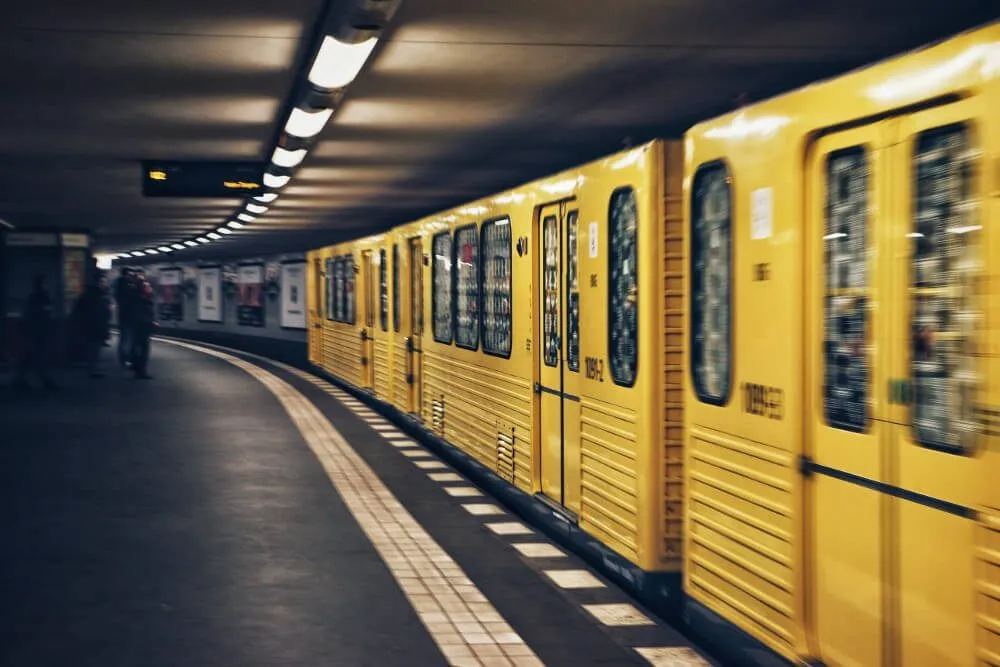
Ticket machines are usually located at stations in Berlin. Paper tickets are validated before travel at the validators on the platforms. Alternatively, the “WelcomeCard” is available as a print ticket and can therefore be printed out in advance.
However, personalized Print@Home tickets on the subway are only valid with an official photo ID. If you wish, you can also use the “BVG Fahrinfo” app, which can also be used to book all common tickets. An official photo ID must also be carried with personalized mobile tickets.
The subway timetable in Berlin, as in other major cities around the world, is very tightly timed to enable convenient and fast travel within the city. During the week, the subway in Berlin starts operating at around 4:00 AM, depending on the line, and stops at around 1:00 AM. Depending on the time of day, the interval on the U2 is around 3 to 4 minutes during frequent service and 15 minutes during weekend night service. On its regular section, however, the U1 runs at its usual 10-minute interval. At weekends, all subway lines in Berlin except the U4 run throughout Friday/Saturday and Saturday/Sunday nights and nights before public holidays at 15-minute intervals.
U1 (PDF timetable dated December 14, 2025; on weekdays, the U1 now ends at Nollendorfplatz instead of Warschauer Straße), U2, U3, U4, U5, U55 (part of the U5 since 2020; see the U5 timetable), U6, U7, U8, U9
If you want to get around Berlin during the week after the subway closes, you can use the Metrotram (M lines), which operate 24 hours a day. After 12:30 AM, the Metrotram runs every 30 minutes. Alternatively, there are the night bus lines N1, N2, N3, N5, N6, N7, N8 and N9, whose routes are roughly based on those of the subway lines.
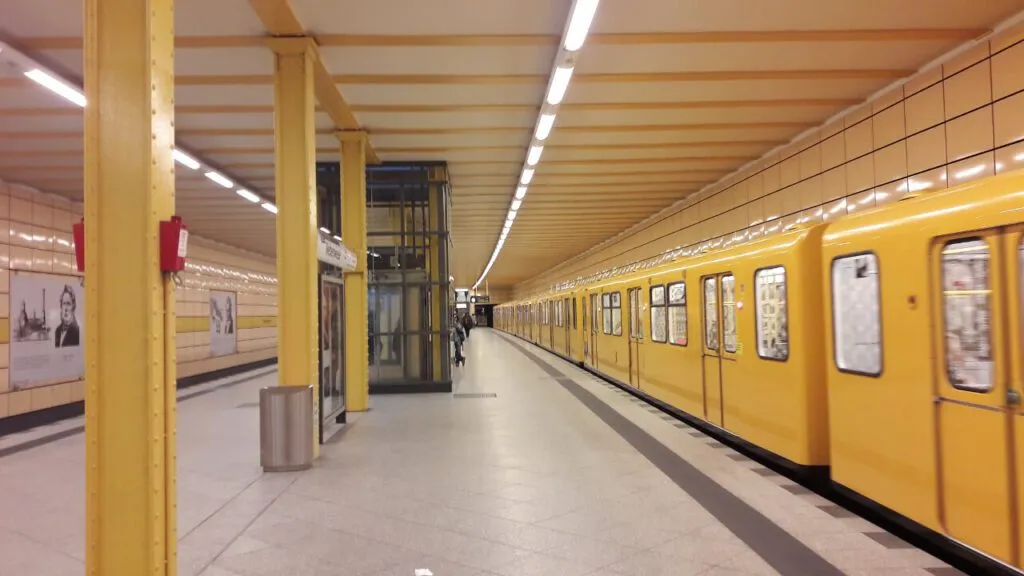
Berlin visitors may well experience déjà vu when descending to the subway stations, as some have already been the backdrop for numerous well-known films. In addition to German productions such as “Otto – Der Liebesfilm”, “Emil und die Detektive” and “Zeiten ändern dich”, Hollywood blockbusters were also filmed there. The Bundestag U5 station in particular will be familiar to film fans from Equilibrium and Resident Evil. Matt Damon was also a guest on the Berlin subway as part of the filming of the thriller “The Bourne Conspiracy”.
In the future, the subway plan in Berlin could expand considerably. The merger of the U5 and U55 lines opened on December 4, 2020. Everyone can ride the completed section from Alexanderplatz via Unter den Linden station to Brandenburger Tor. The Berlin Senate has decided to continue planning the U8 extension from Wittenau to Senftenberger Ring, with a station at “Märkisches Zentrum”. The closure of the gap in the U1 under Ku’Damm to Adenauerplatz with transfer options to the U7 is among the possible measures for the updated local transport plan. Furthermore, the extension of the U7 from Rudow via Schönefeld to BER Airport is currently being considered.
BER Airport has no direct subway connection. From Berlin Hauptbahnhof, the FEX reaches the airport station beneath Terminal 1 in about 23 minutes. Alternatively, take the U7 to Rudow station and change there to the X7 bus. You need an ABC ticket for the journey from the city center.
A single ticket for Berlin AB costs €4.00 (≈ $4.49), or €2.50 (≈ $2.80) at the reduced fare. It is valid for 120 minutes in one direction after validation; transfers are allowed, but round trips and return journeys are excluded. You need the ABC fare zone for trips to BER Airport.
Yes. The Deutschlandticket costs €63.00 (≈ $70.65) per month in 2026 and is valid on the Berlin subway and on local and regional transport throughout Germany. It is not valid on ICE, IC or EC trains. The subscription can be canceled monthly; it is not sold for a single calendar day.
On Friday/Saturday and Saturday/Sunday nights and nights before public holidays, eight subway lines run throughout the night, at intervals of about 15 minutes; the U4 is excluded. On weekday nights, night buses N1, N2, N3, N5, N6, N7, N8 and N9 replace the corresponding subway lines.
The former U55 has been part of the U5 since December 4, 2020. Today the U5 runs through from Hauptbahnhof to Hönow, also serving Brandenburger Tor and Bundestag. There is no longer a separate U55 or U55 timetable.
You might also be interested in these metro maps – for comparison or for your next trip: